
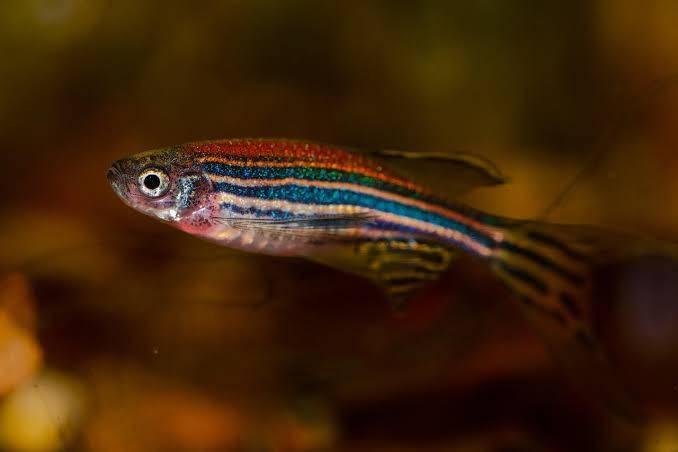
What can a tiny freshwater fish possibly teach us about the human body? Quite a lot, as it turns out.
This little fish is the zebrafish, a small freshwater species native to South Asia. Scientists use zebrafish as a model organism to study how genes work, how organs develop and how diseases affect the body. Despite their very different appearance from humans, zebrafish share about 70% of their genes with humans, while around 84% of human disease-associated genes have a zebrafish counterpart. This genetic similarity makes them valuable for studying human biology and disease.
A model organism is a species that scientists study to understand biological processes that may also occur in humans. Instead of immediately testing every question in humans, researchers can first investigate how a disease develops, how a gene functions or how a potential medicine works in a model organism.
So, what makes zebrafish such a good model?
One major advantage is that many of their biological systems are surprisingly similar to ours. Zebrafish have organs and systems that perform functions comparable to those in humans, including the heart, brain, eyes, liver, kidneys and immune system. Their genes can also be switched off, altered or studied to understand what happens when a particular gene does not work normally.

This is particularly useful for studying genetic diseases. If scientists know that a particular human gene is associated with a disease, they can study its zebrafish counterpart and observe what happens when that gene is changed. This can reveal clues about how the disease develops and help researchers investigate possible treatments.
Zebrafish are also famous for their transparent embryos. When zebrafish eggs hatch, the developing embryos are almost transparent, allowing scientists to observe organs and tissues forming under a microscope without having to open the animal. Researchers can watch the heart begin to beat, blood vessels develop and organs take shape in real time.
This makes zebrafish especially useful for studying development. Scientists can observe what happens when a gene is altered or when a developing embryo is exposed to a particular chemical. Instead of taking a snapshot of development, they can watch the process unfold.
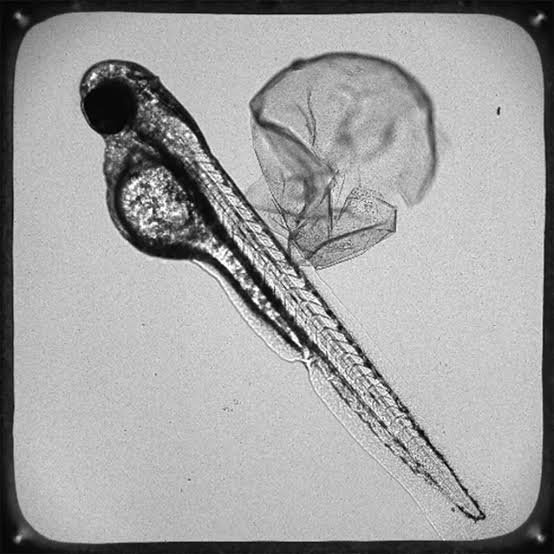
Their rapid development is another major advantage. Important organs and systems begin developing within a very short time after fertilisation. This allows researchers to study biological processes much faster than they could in many larger animals.
Zebrafish also reproduce quickly and produce many offspring. A single pair can produce a large number of eggs, giving scientists many embryos to study at once. This makes zebrafish particularly useful for large-scale experiments and drug screening. Researchers can test many potential compounds and observe whether they have a useful effect or cause harmful changes.
Zebrafish have become important in the study of the heart. One remarkable feature is their ability to regenerate heart tissue after injury. Humans have a much more limited ability to regenerate damaged heart muscle. By studying how zebrafish repair their hearts, scientists hope to understand the biological mechanisms involved in regeneration and whether some of these mechanisms could eventually help develop new approaches to treating heart disease.
The zebrafish brain is also useful for studying the nervous system. Researchers use zebrafish to investigate neurological and neurodevelopmental disorders, behaviour and the effects of chemicals on the brain. Because their embryos are transparent, scientists can also observe the development and movement of certain brain cells.
Cancer is another important area of zebrafish research. Scientists can study how cancer cells grow, move and interact with surrounding tissues. They can also investigate how tumours respond to different drugs. This can help researchers identify promising treatments for further investigation.
Zebrafish are also valuable for drug discovery and safety testing. A potential medicine may have the desired effect on a disease but could also cause harmful effects elsewhere in the body. By observing how zebrafish respond to different compounds, researchers can gather useful information before moving towards more complex studies.
Of course, zebrafish are not miniature humans. There are important differences between the two species, and a result observed in zebrafish does not automatically mean that the same result will occur in people. Scientists therefore use zebrafish as one part of a much larger research process, alongside cells, other model organisms and eventually carefully controlled human studies.
The real strength of zebrafish lies in the combination of their genetic similarity, rapid development, transparent embryos, ability to produce many offspring and suitability for genetic and drug studies. They allow scientists to see biological processes that would otherwise be difficult to observe.
So, the next time you see a tiny zebrafish swimming in an aquarium, remember that this little fish is helping scientists answer some very big questions. From how our organs develop to how diseases begin and how potential medicines work, zebrafish are providing valuable clues that could one day contribute to better ways of preventing, diagnosing and treating human disease.