
SEMPORNA: A tiny crustacean living in a submerged cave off Pulau Sipadan has revealed a bigger scientific mystery: how much of Sabah’s extraordinary biodiversity remains unknown to science?
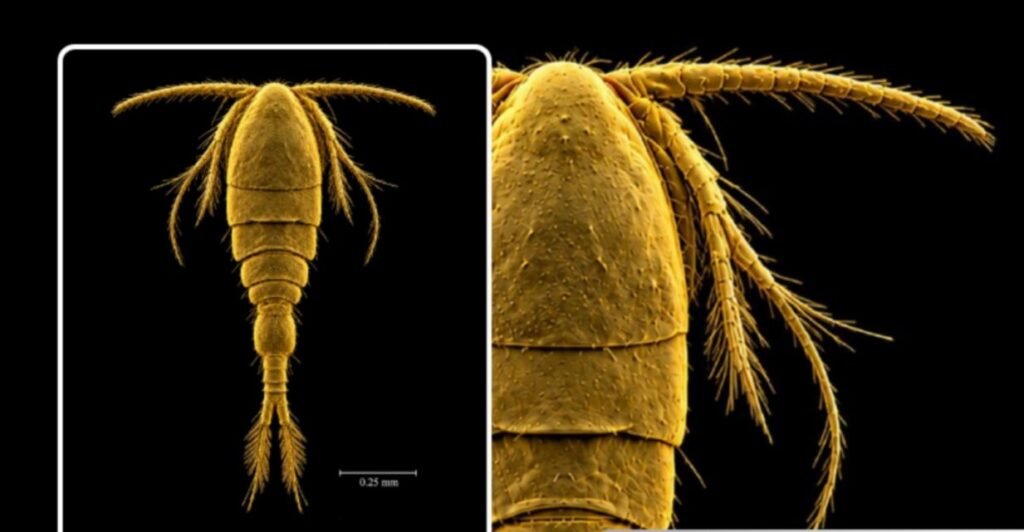
Named Sipadanomolgus dissimilis, the newly described copepod is remarkable not only because it represents a new species, but also because researchers established an entirely new genus to accommodate it.
The specimen was collected using a light trap inside Turtle Tomb, a submerged marine cave at the world-renowned diving destination off Sabah’s east coast.
Associate Professor Dr Azman Abdul Rahim of Universiti Kebangsaan Malaysia, who led the research, said the specimen possessed a distinctive combination of anatomical features that did not fit any existing genus within its family.
The discovery was made under the Ocean Census programme, a global initiative to accelerate the discovery and documentation of marine life. Azman collaborated with Dr Chaichat Boonyanusith of Nakhon Ratchasima Rajabhat University and Dr Koraon Wongkamhaeng of Kasetsart University, both in Thailand.

Their findings were published in the European Journal of Taxonomy recently.
The discovery adds to previous reports of newly described crustaceans from Turtle Tomb, reinforcing the scientific value of investigating specialised marine habitats that may harbour organisms rarely encountered in conventional surveys.
For Sabah, internationally celebrated for its coral reefs, marine turtles and spectacular underwater landscapes, the finding offers a reminder that biodiversity is not always measured by the size or visibility of the animals inhabiting its waters.
Some of its most scientifically significant inhabitants may be organisms small enough to escape the notice of divers but distinctive enough to reshape scientists’ understanding of marine life.
A new genus, not merely a new species
In biological classification, a species is a basic unit used to identify and distinguish organisms. A genus groups closely related species that share important characteristics.
The establishment of Sipadanomolgus therefore carries particular significance. It indicates that the specimen’s anatomical characteristics could not be adequately accommodated within the genera already recognised in its family.
Copepods are small crustaceans found in marine and freshwater environments. They form an important component of aquatic ecosystems, although their ecological roles vary among species. Many are part of the food web, transferring energy from microscopic producers and other organisms to larger animals.
Their small size does not diminish their scientific importance. Detailed examination of their body structures can help researchers distinguish closely related organisms, trace evolutionary relationships and document the diversity of life in different habitats.
The Sipadan discovery illustrates the value of specialist taxonomic research: collecting an organism is only the first step; establishing its identity and relationship to known species may require detailed anatomical comparisons and formal scientific description.
The finding does not mean that the copepod evolved recently. Rather, it means that researchers have now formally recognised and described an organism previously unknown to science in this taxonomic form.
Turtle Tomb’s Hidden World
Turtle Tomb provides an unusual setting for biodiversity research. Unlike an exposed coral reef, a submerged cave presents a specialised environment in which light availability, water movement, physical structure and access to food may differ from surrounding habitats.
Such differences can influence which organisms inhabit a location and how they interact with their environment. They can also make specialised habitats important places to investigate organisms that may be overlooked by broader surveys.
The use of a light trap to collect the copepod highlights the importance of appropriate sampling techniques. Small aquatic organisms may not be readily detected through visual observation alone, and their identification may require microscopic examination and specialist taxonomic expertise.
Previous reports of crustacean discoveries from Turtle Tomb make the site a promising focus for further research. However, establishing how many new species it contains, and whether any are endemic to the cave, will require additional surveys and published evidence.
The distinction matters because discovering a species at one location does not automatically establish that it exists nowhere else. Researchers must gather sufficient evidence to determine its distribution and ecological characteristics.
Nevertheless, repeated discoveries from the same specialised habitat raise important questions about how much biodiversity remains undocumented in Malaysia’s marine environments.
Beyond the coral reefs
Sabah’s biodiversity extends well beyond its best-known marine attractions.
Its waters, mountain ecosystems and tropical forests contain organisms with different ecological requirements, many of which need specialised research methods to identify and study.
At Pulau Sipadan, public attention has traditionally focused on the island’s coral reefs, turtles and larger marine animals. The copepod discovery expands that picture by drawing attention to the small organisms inhabiting less accessible underwater environments.
The same principle applies to terrestrial biodiversity.
Mount Kinabalu, for example, is recognised for its distinctive mountain ecosystems and endemic plants and animals. Its carnivorous pitcher plants, including Nepenthes rajah, illustrate how specialised environmental conditions can support remarkable forms of life.
In Sabah’s interior, Maliau Basin and Danum Valley offer other important settings for investigating tropical biodiversity. Their forest ecosystems support diverse communities of plants, insects and other invertebrates, including organisms that may require specialist surveys and taxonomic work before they can be properly identified.
These established biodiversity centres should not, however, be treated as evidence that every unusual organism found there represents a new species. Each claim requires confirmation through research and formal scientific description.
The comparison instead highlights a broader scientific challenge: biodiversity surveys must look beyond familiar or conspicuous animals if they are to produce a more complete picture of life in Sabah.
From discovery to conservation
Documenting previously unknown species is more than an exercise in expanding scientific catalogues.
Reliable identification provides a foundation for understanding how organisms are related, where they occur and what environmental conditions they require. Such knowledge can help researchers assess the significance of habitats and identify questions that need further investigation.
Yet a newly described species does not automatically qualify as threatened, rare or endemic. Those conclusions require evidence about its distribution, population, ecology and exposure to environmental pressures.
For marine caves such as Turtle Tomb, further research could investigate whether the copepod occurs elsewhere around Sipadan, how it interacts with other organisms and whether changes to its habitat could affect its survival.
The discovery also raises a practical question for Malaysian marine science: how can researchers ensure that specialised habitats receive sufficient attention, sampling and long-term study?
Programmes such as Ocean Census can help accelerate the documentation of marine life through international collaboration. Continued work by Malaysian universities and conservation authorities will be important in turning individual discoveries into a fuller understanding of the country’s marine biodiversity.
The Sipadan copepod may be minute, but its scientific significance reaches beyond its size. By requiring researchers to establish an entirely new genus, it demonstrates that even a celebrated marine destination can still hold organisms that challenge existing scientific classifications.
The next discovery may come from another submerged cave, an overlooked reef organism or a less-studied forest habitat.
For scientists, the challenge is not simply to find more species, but to understand what those discoveries reveal about the complexity of life and the habitats on which it depends.
About the Author: Joseph Masilamany is the News Editor of The Petri Dish