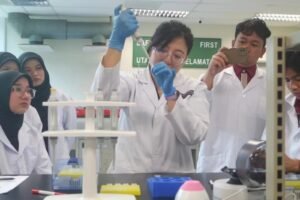

ESGpedia’s Jozsef Acabo tells The Petri Dish that reliable emissions data could help Malaysian steelmakers manage carbon costs, unlock green financing and prepare for a low-carbon future.
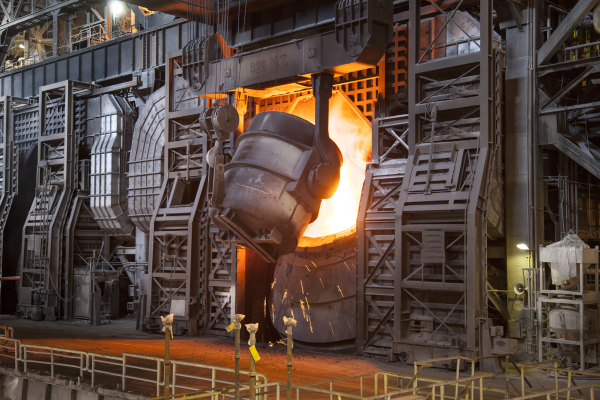
Malaysia’s steel industry faces a growing challenge: how to reduce its carbon footprint without undermining its competitiveness, raising production costs or putting thousands of jobs at risk.
As carbon pricing measures and international trade rules increasingly penalise carbon-intensive production, steelmakers must show how much carbon dioxide (CO₂) they emit per tonne of steel.
For Jozsef Acabo, vice president of ESGpedia, establishing that figure is a practical first step toward a greener, more competitive industry.
“Before companies can effectively reduce their carbon emissions, they need to know how much they are emitting in the first place,” Acabo told The Petri Dish.

“Reliable emissions data is essential for steelmakers to understand their carbon exposure, identify opportunities to improve efficiency and demonstrate their environmental performance to regulators, banks and customers.”
Malaysia’s steel industry, valued at RM26 billion and supporting about 278,000 jobs, is under pressure from several directions. Carbon charges, additional taxes on raw materials and competition from cheaper imports are adding to the challenges facing producers.
The transition to cleaner steelmaking also requires substantial investment, including in hydrogen-based production technologies. Such projects can involve billions in capital expenditure, while uncertain returns and limited willingness among buyers to pay a premium for greener steel complicate investment decisions.
Against this backdrop, Acabo believes companies can begin preparing for the transition without immediately committing to expensive new production technologies.
Carbon accounting: The first step towards green steel
Malaysia’s carbon tax measures for 2026 and the European Union’s Carbon Border Adjustment Mechanism (CBAM) are increasing the importance of measuring industrial emissions.
CBAM applies to covered imports, including steel, with carbon-related financial obligations determined by the mechanism’s rules and the emissions associated with the products concerned.
For Malaysian exporters, the ability to substantiate emissions figures can therefore have implications for compliance and competitiveness in European markets.
Companies that cannot provide credible emissions data may face the use of default values under applicable reporting and calculation rules. Depending on the circumstances, these values could result in a higher assessed carbon footprint than a company’s actual emissions warrant.
Acabo said reliable measurement helps businesses understand their starting position and make better-informed decisions about reducing emissions.

“Carbon accounting is not simply about meeting regulatory requirements. It gives companies the information they need to manage their operations, assess risks and plan their transition towards lower-carbon production,” he said.
Rather than immediately replacing existing facilities, steelmakers can begin by measuring their emissions, identifying the main sources and establishing a baseline against which future improvements can be assessed.
This information can help them determine where energy efficiency improvements, operational changes and cleaner technologies could deliver the greatest benefits.
Opening doors to green financing
Carbon data can also strengthen a company’s access to financing.
Banks and financial institutions increasingly incorporate environmental, social and governance (ESG) considerations into lending decisions. Sustainability-linked loans, for example, may tie financing terms to agreed sustainability targets and measurable performance indicators.
ESGpedia works with more than 1,000 companies across Asia and partners with more than 10 banks on sustainability-linked loans.
“Companies need credible, measurable information to demonstrate their sustainability performance. Without reliable data, it becomes much harder to establish targets, track progress and show lenders that commitments are being translated into action,” Acabo told The Petri Dish.
For steelmakers, better emissions data could help support financing applications for energy efficiency improvements, production upgrades and other investments that reduce environmental impacts.
The World Bank has also highlighted the need for Malaysia to expand green finance to support its climate transition.
However, measuring emissions alone does not guarantee access to funding. Companies must also meet lenders’ requirements, demonstrate credible plans and, where applicable, show progress against agreed targets.
ESGpedia recently conducted a national webinar with the Malaysia Steel Institute on the challenges and opportunities associated with carbon measurement in the steel industry.
The initiative reflects the growing need for producers to understand how emissions reporting connects with regulatory compliance, financing and market access.
Greener steel and global market access
The business case for carbon accounting extends beyond taxation and lending.
Environmental performance is increasingly considered in procurement decisions, with some tenders and corporate supply chains assessing suppliers against ESG criteria.
Steelmakers that can document their emissions and demonstrate progress towards reduction targets may be better positioned to respond to these requirements.
For exporters, credible emissions information is particularly important as international markets introduce measures to account for the carbon embedded in traded products.
The EU’s CBAM makes emissions reporting and the applicable carbon-cost rules especially relevant to businesses supplying covered goods to the European market.
For smaller producers, meeting these expectations can be difficult because of limited financial resources and technical expertise. Yet failing to prepare could increase uncertainty over compliance costs and weaken their position when competing for contracts.
Acabo said emissions measurement should be viewed as part of a broader business strategy rather than an isolated environmental exercise.
“Understanding their carbon footprint allows companies to make informed decisions about where to invest, how to improve efficiency and how to remain competitive as market expectations evolve,” he said.
A transition built on evidence
The move towards lower-carbon steelmaking will require technological innovation, investment and changes throughout the supply chain. Carbon accounting cannot replace these measures, but it can help companies identify priorities and assess the results of their efforts.
For Malaysia’s steel industry, the immediate task is to establish reliable emissions baselines and develop the capacity to report them consistently.
This could help producers better understand their exposure to carbon costs, strengthen their engagement with financial institutions and respond to customers demanding more credible sustainability information.
The longer-term challenge will be translating that knowledge into measurable emissions reductions while ensuring that investments remain commercially viable.
As carbon pricing and sustainability requirements reshape industrial markets, the ability to measure emissions accurately is becoming an increasingly important component of business resilience. For steelmakers facing the transition, knowing the carbon footprint of every tonne produced may be the first step towards making Malaysian steel both greener and more competitive.
About the Author: Joseph Masilamany is News Editor of The Petri Dish.