

Advances in battery chemistry, 800-volt systems and thermal management are helping electric vehicles charge faster, but safety, battery life and charging infrastructure remain critical challenges.
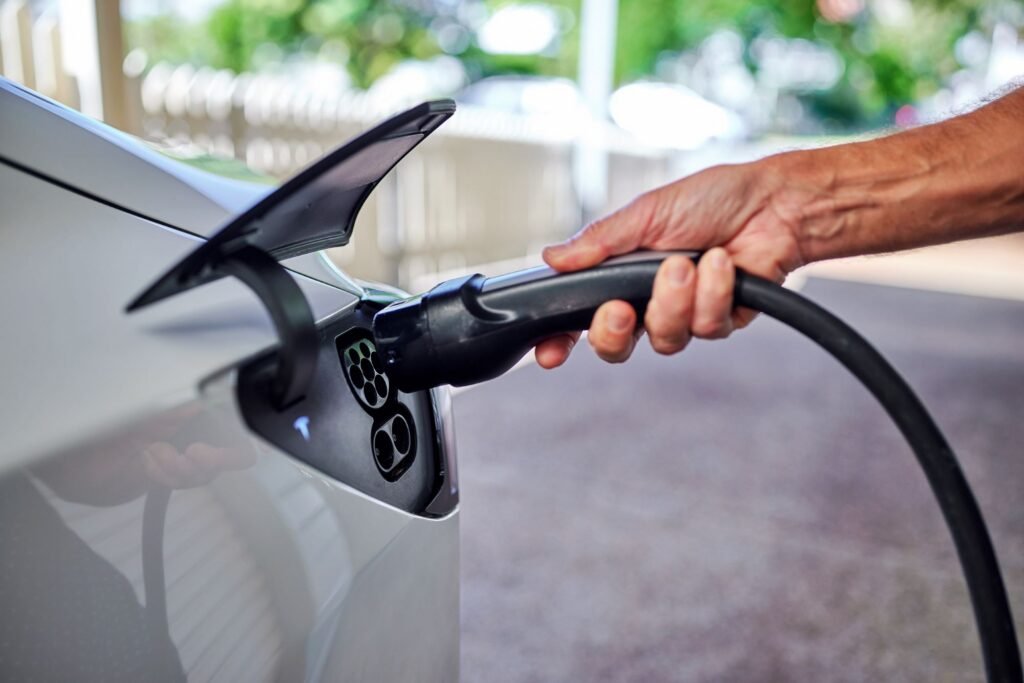
Imagine stopping at a highway service station with an electric vehicle (EV), plugging it into a high-powered charger and returning 15 minutes later to find the battery charged from 10% to 80%.
What once seemed impractical is now possible with some electric vehicles under favourable conditions. Behind this progress lies a combination of advances in battery chemistry, electrical engineering and thermal management.
But charging an EV faster is not simply a matter of supplying more electricity. Engineers must also prevent overheating, preserve battery life and ensure that the battery can safely store the energy being delivered.
From lead-acid to lithium-ion

The development of modern EV batteries reflects more than 160 years of advances in rechargeable battery technology.
In 1859, French physicist Gaston Planté developed the lead-acid battery, widely recognised as the first rechargeable battery. Relatively inexpensive and capable of delivering high currents, it powered some early electric vehicles. However, its low energy density made it heavy relative to the energy it could store.
Nickel-metal hydride (NiMH) batteries subsequently became important in hybrid vehicles. The Toyota Prius, introduced in Japan in 1997, helped bring this technology into the mass market.
Battery management systems also became increasingly important. By keeping batteries within controlled charging and discharging limits, these systems reduced stress and helped extend service life, although they restricted the capacity available for normal use.
A breakthrough came with the commercialisation of lithium-ion batteries in 1991. Their high energy density and relatively low weight made them suitable for portable electronics and, eventually, electric vehicles.
John B. Goodenough, M. Stanley Whittingham and Akira Yoshino received the 2019 Nobel Prize in Chemistry for their contributions to lithium-ion battery development.
Today, lithium-ion technology underpins much of the EV industry. The next challenge is to make these batteries accept energy more quickly without compromising performance, durability or safety.
Why faster charging is difficult
Inside a lithium-ion battery, lithium ions move from the positive electrode, known as the cathode, through an electrolyte and into the negative electrode, commonly made from graphite. During charging, the ions enter the graphite structure through a process called intercalation.
When charging occurs too quickly, particularly at low temperatures or when the battery is nearly full, the graphite may be unable to accommodate the incoming lithium ions efficiently. Metallic lithium can then accumulate on the anode’s surface, a process known as lithium plating.
Under certain conditions, this deposited lithium can form dendritic structures that damage the battery’s internal separator. The resulting internal short circuit can, in severe cases, trigger a fire.
Heat creates another problem. High charging currents generate resistive heat in the battery and electrical connections. Without adequate temperature control, excessive heat can accelerate chemical degradation and increase the risk of thermal runaway, a chain reaction in which rising temperatures generate further heat.
Repeated charging and discharging also cause electrode materials to expand and contract. Over time, these changes can contribute to cracking and structural damage, reducing battery capacity.
Engineers therefore face a three-way challenge: increase charging speed, maintain safety and preserve battery longevity.
Engineering a faster battery
One promising approach involves improving the materials used in battery electrodes.
Silicon-enhanced anodes, for example, can potentially store substantially more lithium than conventional graphite anodes. This offers opportunities to increase energy capacity and improve battery performance.
However, silicon expands considerably as it absorbs lithium and contracts during discharge. These changes can damage the electrode and shorten battery life. Researchers are developing silicon-graphite blends and engineered structures to manage the expansion while improving performance.
Solid-state batteries are another area of development. Unlike conventional lithium-ion batteries, which use liquid electrolytes, these designs employ solid electrolytes, including specialised ceramics or polymers.
Depending on their chemistry and construction, solid-state batteries could offer higher energy density and improved safety while supporting faster charging. Some designs may also reduce certain forms of lithium dendrite growth.
However, solid electrolytes do not automatically eliminate dendrites or other battery hazards. Manufacturing complexity, material compatibility, durability and cost remain significant challenges to wider adoption.
Electrical architecture offers another route to faster charging.
Many electric vehicles use 400-volt electrical systems, while some newer models employ 800-volt architectures. At the same power output, doubling the voltage halves the current. Because resistive power losses increase with the square of the current, higher voltage can reduce these losses in relevant electrical components under comparable conditions.
This helps manufacturers deliver high charging power while reducing current-related heat losses. However, an 800-volt system does not guarantee faster charging by itself. The battery’s chemistry, temperature, design and permitted charging rate remain important, as does the charger’s capacity.
Keeping batteries at the right temperature
Thermal management is central to rapid charging.
Before arriving at a charging station, some EVs can precondition their batteries by heating or cooling them to a suitable temperature. This prepares the battery to accept energy more efficiently.
Preconditioning is particularly useful in cold conditions, when lithium-ion batteries are more susceptible to lithium plating. In hot conditions, cooling systems help prevent excessive temperatures from accelerating battery degradation.
Liquid cooling is widely used in modern EV battery packs. More specialised methods, including immersion cooling in electrically non-conductive fluids, are also being explored or used in particular applications.
The effectiveness of these systems depends on battery design, reliability, cost and manufacturing requirements.
Together, improvements in electrode materials, electrical systems and temperature control allow manufacturers to increase charging performance without treating speed as the only measure of success.
The charging network matters too
Even the most advanced battery cannot charge faster than the available infrastructure allows.
The draft cites Oliver Gross, a senior fellow for electrical energy technology at Stellantis in Amsterdam, who discussed EV market development and charging infrastructure in a recent podcast.
He said: “The wider point is that a vehicle’s maximum charging capability depends on whether a suitable charging station can supply the required power.”
Some stations share available power between vehicles. Grid capacity and local electricity infrastructure can also limit the installation of additional high-power chargers.
This creates a practical challenge for governments, energy providers and charging-network operators. Expanding EV ownership requires not only better vehicles but also a dependable network of accessible charging points capable of meeting demand.
For drivers, the distinction between a vehicle’s advertised maximum charging rate and the charging speed they actually experience can be significant.
Speed without sacrificing battery life
Faster charging is an important part of making electric vehicles more convenient, particularly for drivers undertaking long journeys. Yet not every EV can charge from 10% to 80% in 15 minutes. Some can approach that performance under favourable conditions with sufficiently powerful chargers, while others take considerably longer.
Charging also generally slows as the battery approaches full capacity. This helps protect the battery and manage the risks associated with charging at high states of charge.
Battery longevity depends on several factors, including temperature, charging habits, battery chemistry, depth of discharge and the vehicle’s battery management system. Charging speed is only one part of the equation.
The engineering race is therefore not simply to make EVs charge as quickly as possible. It is to develop batteries that can accept energy efficiently, withstand repeated charging cycles and operate safely over many years.
Advances in electrode materials, high-voltage architectures and thermal management are helping move the industry towards that goal. But their benefits will be fully realised only when vehicle technology is matched by reliable charging infrastructure.
The future of electric mobility will depend on how well these systems work together. Faster charging could make EVs more practical for more drivers, provided speed comes with the safety, durability and reliability that everyday transport demands.
About the Author: Wong Qi Wong is participating in The Petri Dish Fellowship Writing Lab.