
KOTA KINABALU — Sabah wants to build a generation that does more than use technology. It wants young people who can understand how technology works, develop solutions to local problems, and turn scientific ideas into innovations that benefit the state.
Chief Minister Hajiji Noor said recently that Science, Technology and Innovation (STI) would be crucial to Sabah’s economic development and the well-being of its people as technologies such as artificial intelligence (AI), automation, biotechnology, space technology and renewable energy advance rapidly.
“Mastery of STI is essential to drive economic growth and improve the people’s well-being,” he said.
For Sabah, the challenge is not simply to produce more students who can operate digital devices or use AI tools. It is to develop the scientific and engineering skills needed to adapt technologies to the state’s own circumstances.
That could mean using sensors and satellite data to monitor crops, applying biotechnology to agriculture and aquaculture, developing renewable-energy systems for remote communities, using marine science to manage coastal resources, or deploying AI to improve healthcare and public services.

From technology users to technology creators
Hajiji said STI would be important to the implementation of the Sabah Maju Jaya (SMJ) 2.0 Development Plan, particularly in developing a skilled workforce for AI, digital technology and other high-impact sectors.
The emphasis on skills reflects a broader shift in the global economy.
AI, robotics, biotechnology, advanced materials and renewable-energy technologies are changing the types of skills demanded by employers and researchers. For Sabah, developing these capabilities locally could reduce dependence on importing expertise while creating opportunities for young people to participate in higher-value industries.
But innovation does not necessarily mean developing the next global technology platform.
Some of the most useful innovations for Sabah could be relatively simple technologies designed around local needs.
Sabah has extensive agricultural land, a long coastline, rich marine biodiversity and large rural and interior communities. These provide natural laboratories for developing technologies suited to tropical environments and geographically dispersed populations.
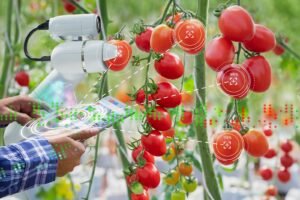
In agriculture, for example, digital sensors and remote sensing can help farmers monitor soil moisture, crop health and weather conditions. Satellite imagery can support the monitoring of plantations and forests.
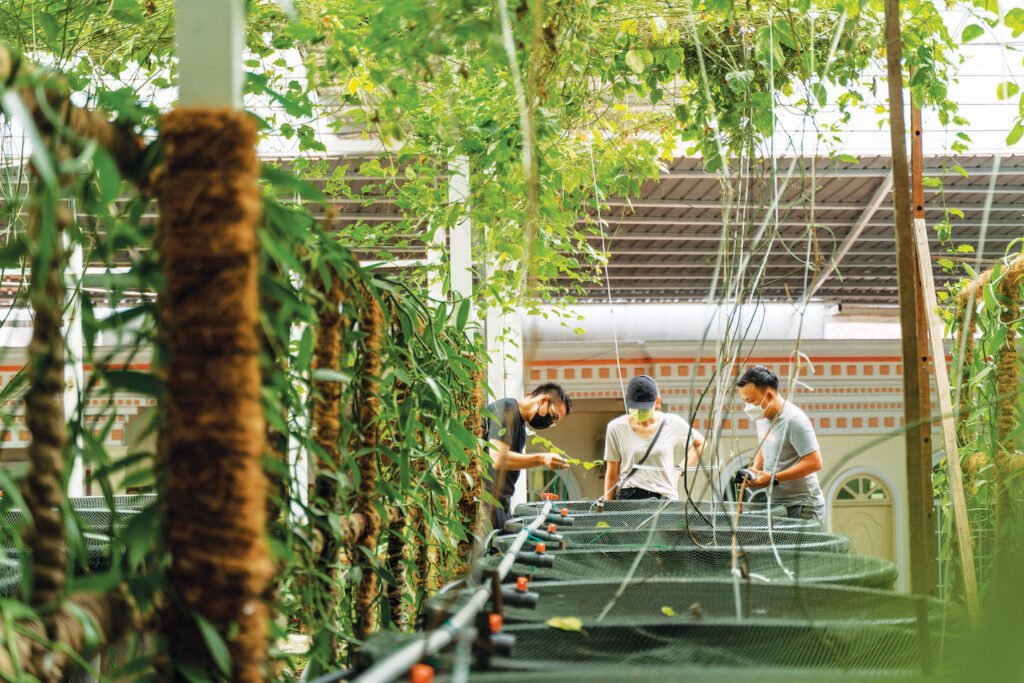
Biotechnology could contribute to crop improvement, disease management, food production and the development of products from biological resources.
Marine technology could help monitor fisheries, coastal ecosystems and water quality, while renewable-energy technologies could help address the challenges of supplying reliable electricity to remote settlements.
The scientific opportunity is therefore closely connected to Sabah’s geography.
Taking science beyond the cities
Hajiji called for stronger cooperation between the state and federal governments, the Ministry of Science, Technology and Innovation (MOSTI), the Sabah Science, Technology and Innovation Council (KPSTI) and UMS.
He also called for STI programmes to be expanded into schools and communities, including rural and interior areas.
That is particularly important.
A technology-driven economy cannot depend only on opportunities available to students in Kota Kinabalu and other urban centres.
Sabah’s geography presents a significant challenge. Communities are spread across a large area, with some located far from major towns and educational institutions.
Access to laboratories, high-speed internet, specialist teachers and science enrichment programmes can therefore vary considerably.
Bringing science programmes to rural schools could help identify students with an aptitude for science and technology who might otherwise have limited exposure to research and innovation.
It also changes the way young people see science.
Science is not simply a collection of subjects to be passed in school. It is a method of asking questions, testing ideas, solving problems and understanding the environment.
That mindset is fundamental to innovation.
Sabah’s natural laboratory
Sabah also has an advantage that should not be overlooked: its natural environment provides an extraordinary range of scientific research opportunities.
Its forests, mountains, rivers, islands and surrounding seas support high levels of biological diversity.
That creates opportunities in fields ranging from biodiversity research and conservation biology to marine science, biotechnology and climate research.
The challenge is to connect this scientific wealth with education, research institutions and commercialisation.
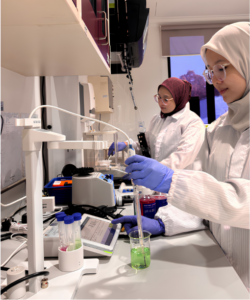
UMS already provides an important base for research and higher education in Sabah. Stronger links between universities, schools, government agencies and industry could help move research beyond academic publications towards technologies, products and services that address local needs.
This is where the concept of an innovation ecosystem becomes important.
A student with a good idea needs more than a classroom. There must be laboratories in which ideas can be tested, researchers who can provide guidance, funding for prototypes, companies willing to develop products and institutions capable of helping innovations reach the market.
Without those connections, promising ideas can remain confined to science fairs, university projects or research papers.
The AI challenge
AI presents both an opportunity and a challenge.
Sabah’s young people will increasingly encounter AI in education, employment, healthcare, business and everyday life. But learning to use generative AI is not the same as understanding artificial intelligence.
Students need foundations in mathematics, computing, statistics, data analysis and scientific reasoning if they are eventually to develop AI systems rather than simply consume them.
There is also a need for digital literacy that includes understanding the limitations of AI.
AI systems can produce convincing but incorrect information. Young people therefore need to know how to verify information, recognise bias and understand where human judgement remains essential.
For a state seeking to build a technology workforce, these skills are as important as access to the technology itself.
Innovation must solve real problems
Hajiji identified agriculture, healthcare, green energy, marine technology and the digital economy as areas where innovation should be encouraged.
These sectors offer an opportunity to make Sabah’s STI agenda practical.
Agricultural technology could help farmers use water, fertiliser and pesticides more efficiently.
In healthcare, digital systems and remote technologies could help connect rural communities with medical expertise, although technology must complement rather than replace healthcare professionals.
In energy, solar power, battery storage and other renewable technologies could have applications in communities where extending conventional infrastructure is difficult or expensive.
Marine technology could support better understanding and management of Sabah’s coastal resources.
And digital technologies can potentially connect remote communities to education, markets, government services and specialist expertise.
The most meaningful measure of innovation, therefore, is not how sophisticated a technology looks but whether it solves a real problem.
For Sabah, that means developing science and technology with the state’s people, environment and geography in mind.
The ambition outlined by Hajiji is ultimately about moving Sabah from being primarily a consumer of technology to becoming a creator and adapter of technologies.
That transition will not happen through a single programme.
It requires sustained investment in science education, research infrastructure, laboratories, teachers, universities, industry partnerships and young researchers.
Most importantly, it requires giving Sabah’s children opportunities to ask scientific questions and attempt to solve problems from an early age.
The next generation of Sabah innovators may not necessarily develop technologies for Silicon Valley or other global technology centres.
They may instead develop a better way to grow food on Sabah’s soil, monitor its forests, protect its marine ecosystems, deliver healthcare to remote communities or generate clean energy for places beyond the reach of conventional infrastructure.
That is where Sabah’s STI ambition could find its most meaningful expression — not simply in producing people who understand technology, but in producing scientists, engineers and innovators who understand Sabah.