
Sabah’s agriculture remains central to the state’s economy, sustaining livelihoods and communities across its rural areas.
Sabah is putting agriculture at the centre of its economic development strategy, with nearly RM1 billion allocated this year for agriculture, industry and tourism as the state seeks to turn the economic potential of its districts into investment, jobs and higher incomes.
Chief Minister Datuk Seri Panglima Hajiji Noor said recently that agriculture remained one of the key drivers of Sabah’s economy and called on District Officers to identify the agricultural strengths and opportunities within their respective areas.
“Some districts have strengths in agriculture. Some have tourism potential. Others have marine resources, while some have potential in industry and trade. These strengths and opportunities must be identified and developed in a planned manner,” he said at the opening of the 29th Sabah District Officers’ Conference at Hotel Perkasa.
“Our task is to ensure that this potential can be translated into investment opportunities, jobs and increased income for the people.”

Beyond oil palm
For Sabah, agriculture remains closely tied to the state’s economic structure and the livelihoods of rural communities.
Oil palm remains the backbone of Sabah’s agricultural economy, occupying a large share of agricultural land and supporting an extensive plantation, milling and downstream processing industry. Sabah is among Malaysia’s major palm oil-producing states, making the commodity an important contributor to agricultural output, exports and rural employment.
But the state’s agricultural future is unlikely to rest on a single commodity.
Sabah has considerable potential in cocoa, coconut, rubber, rice, fruits, vegetables, livestock, beekeeping and aquaculture. These sectors offer opportunities not only to increase food production but also to develop higher-value agricultural activities that generate better returns for farmers and smallholders.
The emphasis on high-value and speciality crops could be particularly important.
Sabah’s diverse climate, soils and geography provide opportunities for premium fruits and other niche agricultural products, including durian, pineapple, speciality vegetables and selected crops suited to particular districts. Where production can be linked to grading, packaging, cold-chain facilities, processing and reliable markets, farmers can potentially earn considerably more than from selling raw produce alone.
Cocoa is another important area. Sabah has historically been one of Malaysia’s significant cocoa-producing regions, while the crop offers opportunities further down the value chain through fermentation, processing, chocolate production and other food products.
Coconut, too, has commercial potential, particularly when production is connected to processing rather than limited to the sale of fresh nuts.
Fruit cultivation provides another avenue for diversification. Tropical fruits, including durian and pineapple, can support not only fresh-food markets but also processing industries producing juices, concentrates, dried fruits and other value-added products.
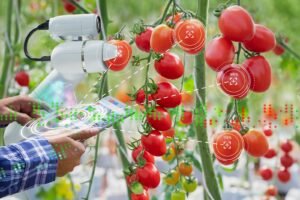
Vegetable farming is equally important, particularly for strengthening local food supplies and reducing dependence on produce brought in from outside the state. Better seeds, irrigation, protected cultivation, mechanisation and post-harvest handling could improve both productivity and profitability.
From padi fields to modern farms
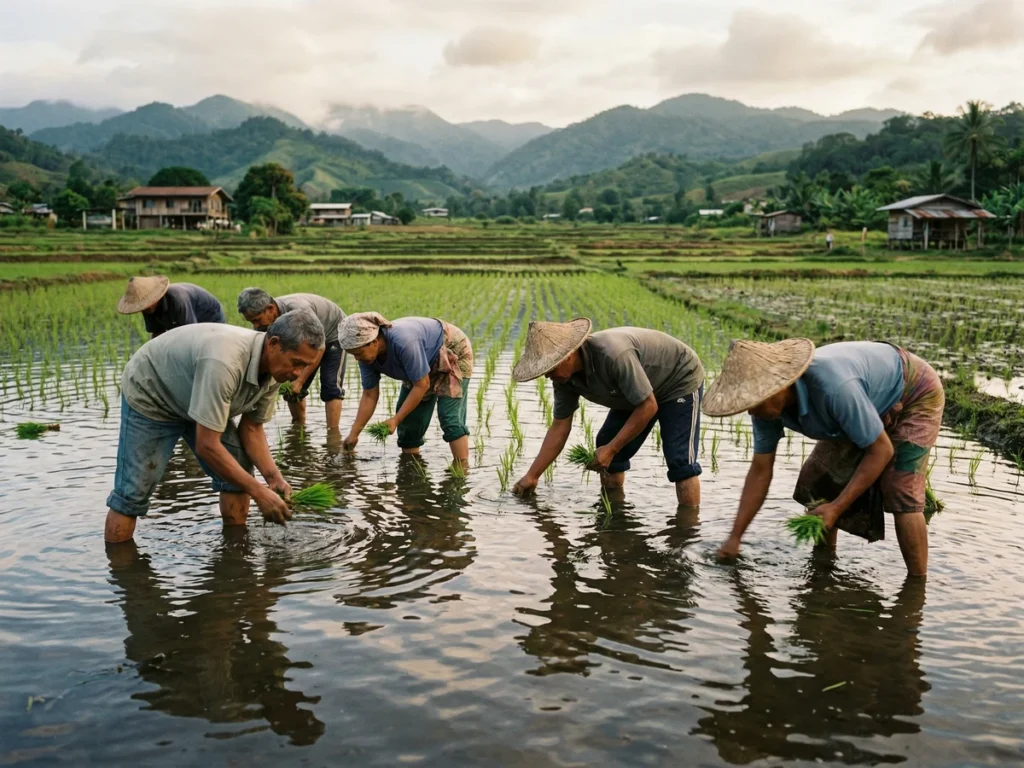
Rice remains strategically important because Sabah has a relatively low level of self-sufficiency in the staple food.
Increasing padi production therefore has significance beyond agriculture. It is directly linked to food security.
Expanding suitable padi areas, improving irrigation and drainage, introducing mechanisation and raising yields could help strengthen Sabah’s capacity to produce more of its own rice.
But increasing production should not be measured simply by the number of hectares planted. The larger challenge is to make farming economically sustainable for younger generations.
That means improving productivity while reducing production costs, ensuring access to markets and creating opportunities for farmers to move into higher-value activities.
The same principle applies to vegetable and fruit cultivation.
Small farms, bigger value
Sabah’s agricultural strategy could increasingly be about generating more value from every hectare rather than simply expanding the area under cultivation.
This is where technology, mechanisation, improved planting materials, irrigation, precision agriculture and post-harvest management become important.
There is also room for less conventional forms of agriculture.
**Beekeeping, for example, can provide an additional income stream for rural households while making use of Sabah’s rich plant and forest resources. Honey production can potentially be linked to branding, processing, tourism and niche food markets.
Livestock farming offers another avenue for diversification, with opportunities in cattle, poultry, goats and other forms of animal husbandry. Strengthening local livestock production could also contribute to food security by reducing dependence on imported meat and other animal products.
Aquaculture provides a further opportunity, particularly given Sabah’s extensive coastline and marine resources. Fish, shrimp, seaweed and other forms of aquaculture can create economic opportunities for coastal communities when developed sustainably and supported by proper infrastructure, technology and market access.
The objective should not be to turn every district into the same kind of agricultural producer.
Hajiji’s call for District Officers to identify their respective comparative advantages is particularly relevant here.
Sabah’s geography is too diverse for a one-size-fits-all agricultural model. The interior districts have different conditions and opportunities from the west coast, while areas with established roads, ports, processing facilities and markets may have greater potential for developing integrated agricultural value chains.
Blue Economy adds another dimension
Agriculture is only one part of Sabah’s wider rural economy.
Hajiji also identified the Blue Economy as an emerging opportunity, particularly for coastal communities.
“Sabah has vast marine resources, biodiversity and coastal areas. This potential must be harnessed prudently to create new economic opportunities and increase community incomes,” he said.
The state’s marine resources offer opportunities in fisheries, aquaculture, seaweed cultivation and marine-related industries. But the economic potential of the sea must be developed alongside environmental protection, particularly in a state whose biodiversity is itself an economic asset.
The larger opportunity lies in connecting these sectors rather than developing them in isolation.
Agriculture can supply agro-processing industries. Processing can create rural employment and new businesses. Tourism can provide markets for local food and agricultural products. Beekeeping and speciality farming can become part of rural tourism. Fisheries and aquaculture can support coastal communities. Technology can improve productivity, traceability and market access across the entire value chain.
With nearly RM1 billion being channelled into agriculture, industry and tourism this year, the test for Sabah will therefore be whether the investment moves beyond infrastructure and production targets to create higher-value opportunities for farmers, smallholders and rural communities.
For a state endowed with extensive land, biodiversity and agricultural resources, the next phase of development may not simply be about producing more.
It may be about producing more value from what Sabah already has — and ensuring that a greater share of that value reaches the people who work the land and waters.