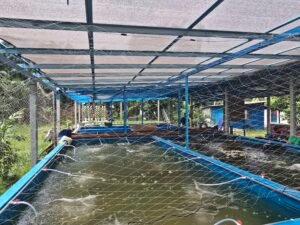

From growth hormones and antibiotics to chicken sausages and ayam kampung, the science behind Malaysia’s favourite protein.
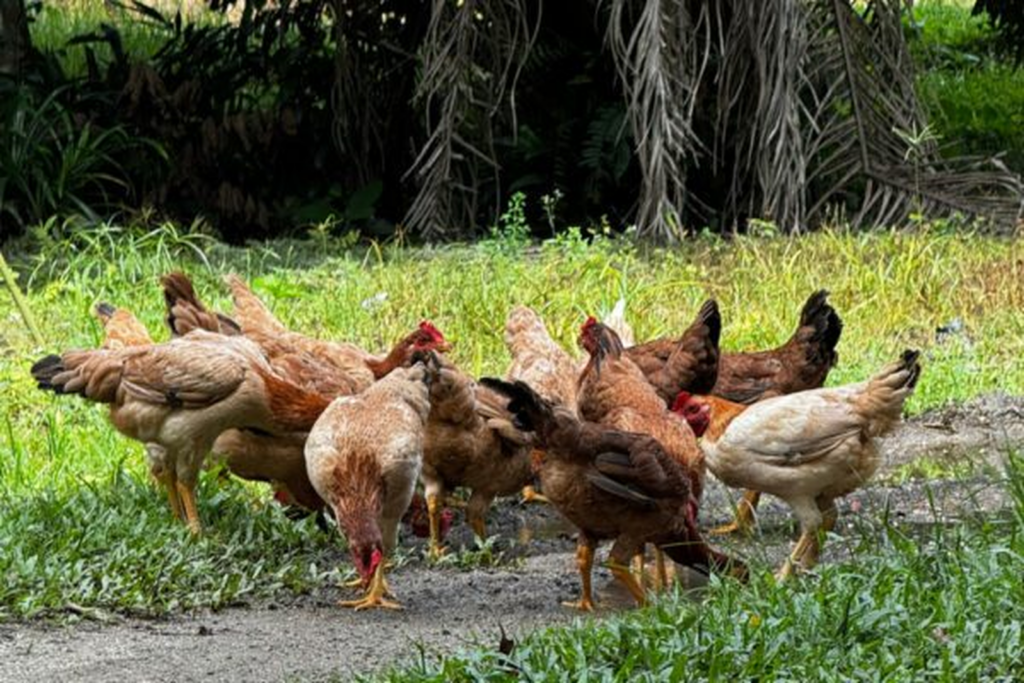
Chicken is a staple in Malaysian households, from roadside ayam goreng (fried chicken) stalls to family dinners. Affordable and versatile, it remains one of the country’s most popular sources of protein.
Yet concerns about commercial poultry farming continue to circulate. Are chickens injected with growth hormones? Could eating them cause early puberty in children? What goes into chicken sausages? And is ayam kampung (chicken bred by free-range system) necessarily healthier?
To separate scientific evidence from popular beliefs, The Petri Dish Ts. Naresh Ravi, a Professional Technologist with expertise in modern poultry management.
The growth hormone misconception

One persistent belief is that commercial chickens are injected with growth hormones to accelerate their growth. Some consumers worry that eating such chicken could interfere with children’s hormonal development and trigger early puberty.
Naresh says there is no convincing scientific evidence supporting these claims.
“The belief that commercial chickens are injected with growth hormones is a myth,” he explains.
Growth hormones are protein-based substances that would be broken down by digestive enzymes if added to chicken feed. Injecting individual birds is also impractical on farms with tens of thousands of chickens. Research has also shown that administering growth hormones produces little or no significant improvement in chicken growth.
Malaysia’s Feed Act 2009 (Act 698) and the Feed (Prohibited Antibiotics, Hormones and Other Chemicals) Regulations 2012 regulate prohibited substances in animal production.
The injections consumers sometimes see are more likely to be vaccinations against diseases such as Newcastle disease and infectious bronchitis.
Concerns about early puberty also require a closer look. Research has consistently associated childhood overweight and obesity with earlier pubertal development, particularly among girls. Excess body fat can influence hormone production and physical development.
“Rather than attributing early puberty to broiler chicken consumption without credible scientific evidence, it is important to consider established metabolic and nutritional factors, including childhood obesity,” Naresh says.
What goes into chicken sausages?
Another concern involves processed chicken products, particularly sausages. Some consumers believe they are made simply by grinding leftover bones, chicken heads and internal organs.
In reality, commercial chicken sausages contain formulated mixtures of poultry meat and other ingredients, depending on the manufacturer.
One ingredient may be mechanically deboned meat (MDM), a process that recovers edible meat remaining on bones after the main cuts have been removed. This does not mean whole chicken bones are simply ground up and added to sausages.
Other ingredients may include chicken skin, fat, water, starch, salt and seasonings. Casings can be natural, collagen, cellulose or synthetic.
Manufacturers in Malaysia must comply with applicable food safety and halal requirements. Consumers should check product labels to understand the ingredients used.
Why do modern chickens grow so quickly?
If hormones are not responsible for rapid growth, what is?
The answer lies largely in selective breeding. Over several decades, poultry breeders have selected birds with desirable inherited characteristics, including faster growth, improved feed efficiency and higher meat yield.
Under suitable farming conditions, modern broiler chickens can reach approximately 2.5 kilogrammes in just 35 days.
Based on his industry experience, Naresh estimates that genetics contributes about 70 per cent of growth efficiency, followed by environmental management at 15 per cent, nutrition at 10 per cent and health management at five per cent. He stresses that these are his own approximate industry estimates, not figures established by scientific studies.
Modern poultry farms also use climate-controlled buildings known as closed-house systems. Exhaust fans remove warm air while fresh air enters through designated inlets and cooling pads. Automated systems monitor temperature, humidity, ammonia and carbon dioxide.
These measures help reduce heat stress and maintain suitable conditions for chickens to grow within their thermoneutral zone, where they do not need to expend additional energy regulating their body temperature.
Antibiotics: Necessary treatment or growing concern?
Unlike growth hormones, antibiotics are genuinely used in poultry farming to treat bacterial infections and, where justified, prevent infections from spreading through a flock.
However, their use requires careful management. Antibiotics were previously also used as growth promoters to improve growth and feed efficiency, raising concerns about antimicrobial resistance (AMR). This occurs when bacteria develop resistance to medicines used to treat infections.
Malaysia has progressively restricted the use of medically important antibiotics as growth promoters under its National Action Plan on Antimicrobial Resistance (MyAP-AMR) since 2019.
This does not mean all antibiotic usage in poultry is prohibited. Naresh stresses that treating sick birds remains important for animal welfare.
“We cannot simply refuse treatment to a sick bird in the name of antibiotic-free production. The objective is responsible antibiotic use, not the complete elimination of necessary veterinary treatment,” he says.
Farmers must also observe withdrawal periods after administering approved veterinary medicines. This waiting period allows drug residues to fall within established Maximum Residue Limits (MRLs) before slaughter. Depending on the medication, it may be seven days, 14 days or another specified duration.
Is ayam kampung really healthier?
For Malaysian consumers, choosing between commercial broiler chicken and ayam kampung often comes down to price and taste.
Regular broiler chicken may cost around RM9 to RM10 per kilogramme, while ayam kampung can fetch RM20 to RM30 or more. But does the higher price mean better nutrition?
Naresh explains that both provide good-quality protein, although nutritional composition varies according to breed, age, diet and farming conditions.
Some native chicken breeds may have leaner meat or higher concentrations of natural compounds such as carnosine and anserine. However, there is insufficient human clinical evidence to establish whether these differences provide meaningful health benefits.
The more noticeable difference is often taste and texture. Commercial broilers are generally harvested at around 35 to 42 days old, producing tender meat that cooks quickly. Ayam kampung is typically raised for 90 to 120 days or longer, resulting in firmer meat that holds its shape better during prolonged cooking.
“If you are making a traditional rendang, sup ayam kampungor a long-simmered curry, standard broiler meat breaks down and turns mushy,” Naresh explains.
Ultimately, choosing ayam kampung is often a matter of personal preference and cooking style rather than an indication that it is automatically safer or healthier.
The future of Malaysia’s poultry industry
Beyond consumer concerns, the poultry industry faces another challenge: its dependence on imported animal feed ingredients.
Although Malaysia achieved a chicken self-sufficiency level of more than 100 per cent in 2022, it remains heavily reliant on imported corn and soybean meal. These ingredients account for approximately 55 to 60 per cent and 20 to 30 per cent, respectively of conventional poultry feed.
Feed accounts for around 70 per cent of farm production costs. Global disruptions, including the Covid-19 pandemic and the Russia-Ukraine war, have demonstrated how rising ingredient prices can put pressure on local farmers and eventually consumers.
Naresh believes Malaysia should explore locally available alternatives, including palm kernel cake, rice bran, cassava and insect-based proteins such as black soldier fly larvae.
However, these alternatives require proper nutritional research and large-scale feeding trials to establish their safety, consistency and commercial viability without compromising chicken growth or meat quality.
Chicken will likely remain a staple in Malaysian households. Understanding how it is produced can help consumers make informed choices rather than be influenced by rumours.
As Naresh reminds consumers, chicken remains an important and affordable source of protein. Decisions about what goes on the dinner table should be guided by scientific evidence rather than misinformation and fear.
Author: Myra Alyssa Faizal is a Biotechnology graduate from the International Islamic University Malaysia (IIUM). She is participating in The Petri Dish Fellowship Writing Lab.