

Large clinical study challenges earlier findings on trigeminal nerve stimulation, highlighting the need for stronger evidence before alternative treatments can be recommended.
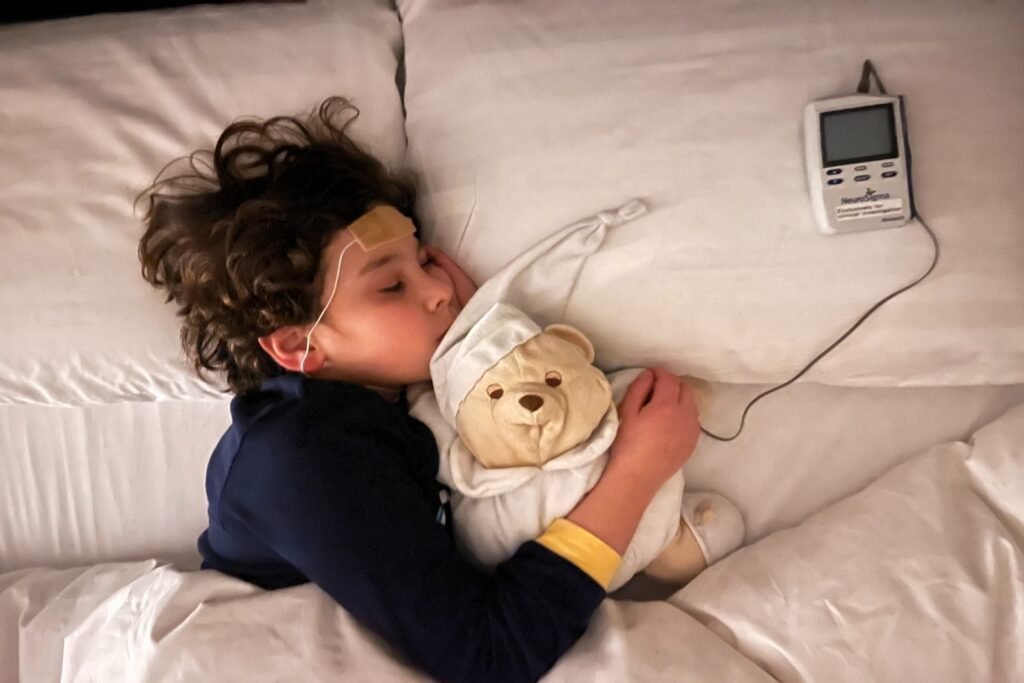
A clinical trial involving 150 children and adolescents with attention-deficit/hyperactivity disorder (ADHD) has found no significant benefit from external trigeminal nerve stimulation (TNS), challenging earlier findings that suggested the technique could help manage the condition.
The findings, published in Nature Medicine in January 2026, showed no significant difference in ADHD symptoms between participants who received active electrical stimulation and those given a sham treatment.
A subsequent analysis published online in the American Journal of Psychiatry in October 2026 also found no significant differences between the groups in cognitive measures, including attention, inhibition and processing speed.
The findings came from the ATTENS study, a multicentre clinical trial led by researchers including Professor Katya Rubia of King’s College London (KCL), who has spent approximately 15 years investigating brain stimulation techniques as potential treatments for ADHD.

The results raise questions about the effectiveness of TNS as a non-medication intervention, particularly after an earlier United States pilot study reported improvements in ADHD symptoms.
Testing An Alternative Treatment
ADHD is a neurodevelopmental condition associated with difficulties in attention, impulsivity and hyperactivity. Although stimulant medication is commonly prescribed, some families seek alternative treatment approaches.
TNS attracted research interest because it uses mild electrical impulses delivered through electrodes placed on the forehead to stimulate branches of the trigeminal nerve.
These nerve pathways connect to brainstem structures involved in regulating alertness and attention, including the locus coeruleus, which is associated with the neurotransmitter noradrenaline.
An earlier US pilot trial reported improvements in ADHD symptoms after four weeks of nightly stimulation. The findings contributed to the device receiving clearance from the US Food and Drug Administration (FDA) in 2019.
Speaking to The Petri Dish, Rubia raised doubts about whether the reported improvements were directly attributable to the stimulation.
Her earlier research into functional magnetic resonance imaging (fMRI) neurofeedback and transcranial direct current stimulation (tDCS) had demonstrated that changes in brain activity did not necessarily translate into improvements in ADHD-related behaviour.
This prompted the need for a larger, controlled investigation of TNS.
No Significant Difference Between Groups
The ATTENS study recruited 150 children and adolescents aged between eight and 18 from London and Southampton. Participants were divided equally into active-treatment and sham-control groups, with both receiving nightly stimulation over four weeks.
Explaining the study’s stimulation protocols, Rubia said: “In the active condition, it was 120 hertz. In the sham condition (control group), they got 30 seconds of stimulation every hour, and then it was switched off. The sham stimulation was 2 hertz.
The sham condition was designed to help maintain participants’ uncertainty about whether they were receiving the active treatment.
According to her, although both groups showed improvements in ADHD symptoms, researchers found no statistically significant difference between them.
She said: “The subsequent analysis of cognitive and physiological outcomes similarly found no significant treatment-related differences in attention, inhibition, processing speed and autonomic nervous system functioning.”
Rubia said the findings were unexpected, as she had anticipated that stimulation would produce improvements, particularly in attention-related tasks, based on the proposed neurological mechanisms.
The results demonstrate that a scientifically plausible explanation for how a treatment might work does not necessarily establish that it produces measurable clinical benefits.
Why Negative Results Matter
Rubia also highlighted the importance of publishing negative findings, noting that research literature has historically tended to favour studies reporting positive results.
This can create an incomplete picture of a treatment’s actual effectiveness and influence how researchers and patients assess emerging medical interventions.
“Negative findings are as important as positive findings,” she said.
Although the ATTENS study found no significant clinical benefit from TNS, the intervention was reported to be safe and well tolerated.
However, safety alone does not establish whether a treatment is effective or clinically useful.
The findings underline the importance of testing promising interventions through adequatelycontrolled clinical trials before presenting them as viable treatment options.
Towards Personalised ADHD Treatment
Rubia has not ruled out the broader potential of neuromodulation research. Instead, she believes future investigations could focus on more personalised approaches that account for differences in brain activity among children with ADHD.
Combining brain stimulation with technologies such as electroencephalography (EEG) and magnetic resonance imaging (MRI) could help researchers identify individual patterns of brain activity and investigate whether particular interventions are more suitable for specific groups of patients.
“Every child is different,” she said.
The findings from ATTENS do not rule out all forms of brain stimulation as potential ADHD treatments. However, they demonstrate that promising early results and theoretical explanations must be supported by evidence from larger, controlled studies.
For researchers, the next challenge is to establish whether more targeted approaches can produce measurable improvements in children who do not respond adequately to existing treatments.
Author: Sharifah Shazryn Afiefy Syed Atif is studying Biomedical Science at King’s College London. She is participating in The Petri Dish Fellowship Writing Lab.