Our bodies produce electricity! Every time your heart beats, tiny electrical signals help make that heartbeat happen. These signals come from specialised cells in the heart, particularly a group of cells called the sinoatrial (SA) node. The SA node acts as the heart’s natural “pacemaker”, producing electrical signals that travel through the heart and tell the heart muscle when to contract.
This electrical activity is what helps the heart beat in a regular rhythm. The signal spreads through the upper chambers of the heart, causing them to contract and push blood into the lower chambers. It then travels through the heart’s electrical conduction system to the lower chambers, causing them to contract and pump blood to the lungs and the rest of the body.
But how do we know that these electrical signals are happening? This is where physics and biology come together.
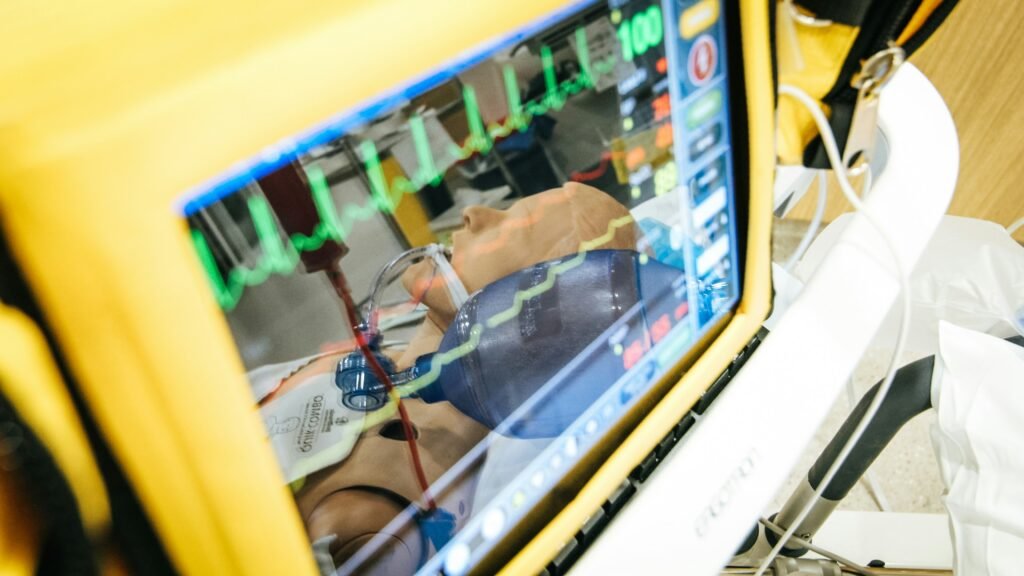
An electrocardiogram, or ECG, is a medical test that measures the electrical activity of the heart. Small electrodes are placed on the skin, usually on the chest, arms and legs. These electrodes detect tiny changes in electrical potential produced as the heart beats. A machine then converts these signals into a pattern of waves that doctors can examine.
You may have seen an ECG in a hospital or on television. The familiar lines rising and falling on the screen are not simply a picture of the heartbeat. They represent the electrical activity associated with different stages of each cardiac cycle. The shape, timing and spacing of these waves can provide important information about how the heart is functioning.

For example, doctors can use an ECG to identify irregular heart rhythms, known as arrhythmias. It can also provide clues about problems such as disturbances in the heart’s electrical conduction system, reduced blood flow to the heart muscle and previous or ongoing damage to the heart.
Where biology meets physics
An ECG is a good example of why we should not think of school subjects as separate compartments.
When you study biology, you learn about the heart, blood vessels, cells, tissues and organs. You learn how the heart contracts and pumps blood around the body. But understanding an ECG also requires physics. Electrical signals involve concepts such as electrical potential, voltage, currents and the detection of very small electrical changes.
Neither subject exists in isolation in the real world.
A doctor needs biology to understand what the heart does and what an abnormal heartbeat might mean. An engineer needs physics and electronics to develop the equipment that can detect and record the heart’s electrical signals. Medical researchers may use biology, chemistry, physics, mathematics and computer science to understand diseases and develop new diagnostic technologies.
Even the ECG pattern itself involves mathematics. The timing between electrical signals can be measured, and the frequency and pattern of heartbeats can be analysed. Modern ECG machines can use computer algorithms to help identify unusual patterns and assist healthcare professionals in interpreting the results.
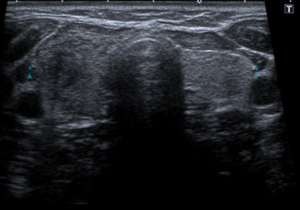
This combination of subjects is found throughout medicine. Medical imaging, for example, brings together physics, biology, mathematics and engineering. X-rays use physics to produce images of structures inside the body. Magnetic resonance imaging (MRI) uses magnetic fields and radio waves. Ultrasound uses sound waves. In each case, knowledge from different fields is combined to solve a real-world problem.
The same principle applies far beyond medicine. Weather forecasting combines physics, mathematics, computer science and environmental science. Agriculture uses biology, chemistry, engineering, data science and technology. Artificial intelligence draws on mathematics, computer science, statistics and knowledge from the fields in which AI is being applied.
Subjects are connected
This is why students should not see Science, Technology, Engineering and Mathematics as completely separate subjects. The labels are useful for organising what we learn, but the real world does not work according to school timetables.
A biologist studying the heart may need physics to understand electrical signals. A physicist developing medical equipment needs biology to understand the system being measured. An engineer designing an ECG machine needs electronics and mathematics, while a doctor needs to understand both the technology and the biology behind the results.
The most interesting discoveries and inventions often happen where different areas of knowledge meet.
So, when you learn about electricity in physics or the circulatory system in biology, remember that these are not isolated pieces of knowledge. One day, the two may come together in something as important as an ECG that helps a doctor understand what is happening inside a patient’s heart.