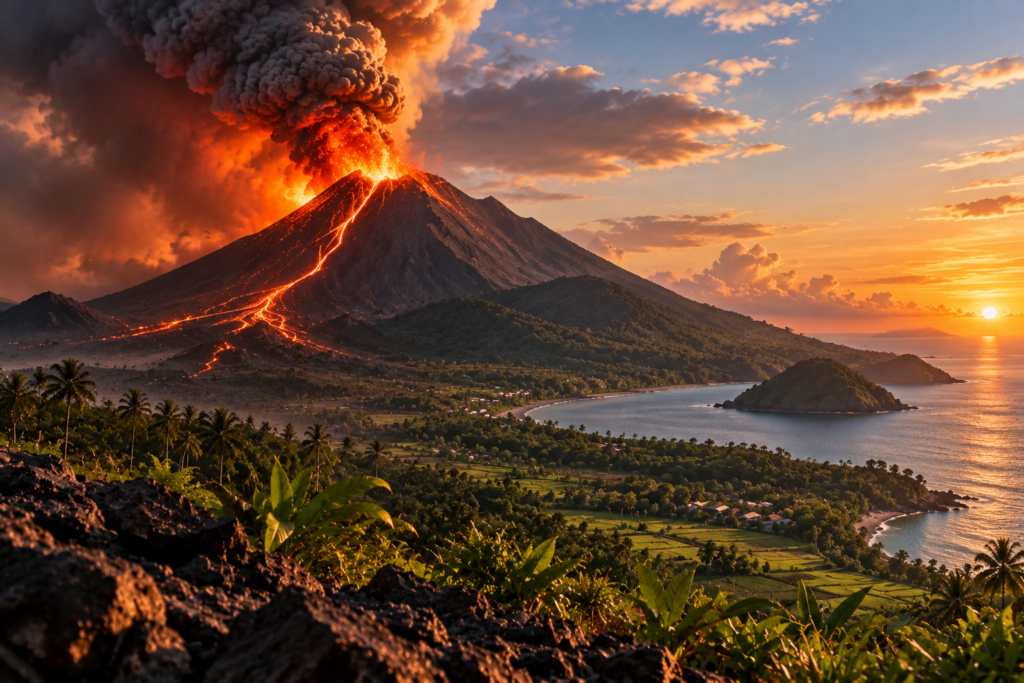
As Anak Krakatau continues to remind us this week, volcanoes are a powerful force of nature: capable of disrupting lives within hours, yet providing benefits that can shape ecosystems, economies and human societies for generations.
They can destroy homes, bury farmland and darken the skies. But the same geological forces can also create fertile soils, generate renewable energy, provide valuable minerals and even build new islands. So, are volcanoes friends or foes? The answer is both.
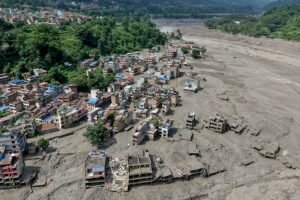
When we think of volcanoes, we often picture rivers of glowing lava, huge ash clouds, communities fleeing from an eruption, and disrupted flights. Volcanic eruptions can be deadly and cause enormous damage to people, agriculture, infrastructure and ecosystems.

But volcanoes are also powerful agents of creation. Over thousands to millions of years, volcanic activity has helped shape landscapes, enrich soils, create habitats and provide resources that human societies depend on. In fact, some of the world’s most productive agricultural regions and important renewable-energy resources are associated with volcanic activity.
From volcanic ash to fertile farmland
One of the most important long-term benefits of volcanoes is the creation of fertile soils.
Volcanic rocks and ash contain minerals that, as they weather and break down, release nutrients into the soil. These include elements such as potassium, phosphorus, iron and magnesium. Over time, this process can produce exceptionally productive agricultural land.
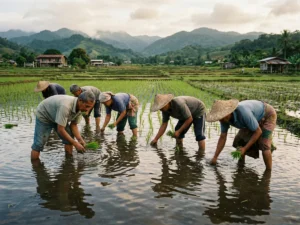
Indonesia provides a striking example. Many of the country’s best rice-growing areas are located near active volcanoes, where weathered volcanic material has helped create rich soils. Farmers in parts of Java grow rice, vegetables, fruits and other crops on land influenced by volcanic deposits.
Italy offers another example. The volcanic soils around Mount Etna in Sicily support vineyards, olive groves, citrus orchards and other crops. Similar benefits can be found around volcanic regions in countries such as Japan, New Zealand and parts of the Mediterranean.
The eruption that destroys a landscape today can contribute to fertile farmland for generations to come.
Volcanoes can power our future
Deep beneath a volcano lies another valuable resource: heat.
Magma heats rocks and underground water, sometimes producing reservoirs of hot water and steam. Humans can tap this geothermal heat to generate electricity or provide heating.
Iceland is one of the world’s best-known examples. Its location on an active volcanic and tectonic zone gives it access to abundant geothermal resources, which are used for heating as well as electricity generation.
New Zealand also makes significant use of geothermal energy. Its volcanic landscape provides access to underground heat that contributes to the country’s electricity supply. New Zealand already generates more than 80% of its electricity from renewable sources, with geothermal power playing an important role alongside hydropower.
Geothermal energy is not limited to Iceland and New Zealand. Other countries with significant geothermal resources include Indonesia, the United States, Türkiye, Kenya and Italy. The International Energy Agency identifies these countries among today’s leading geothermal markets.
Unlike solar and wind power, geothermal energy can provide electricity and heat continuously, making it particularly valuable as countries look for reliable low-carbon energy sources.
A geological treasure chest
Volcanoes also play a role in the formation and concentration of minerals.
Hot fluids circulating through volcanic systems can transport and concentrate metals. Many important metallic mineral deposits, including those containing copper, gold, silver, lead and zinc, are associated with ancient magmatic systems.
Volcanic materials themselves can also be useful. Basalt, pumice and volcanic ash have been used in construction and other industries. Pumice, for example, is lightweight and abrasive, while volcanic materials can be incorporated into construction products.
So the next time you see a volcanic rock, remember that it may be more than an interesting souvenir. It represents part of a geological process that has helped supply some of the materials used by modern societies.
Volcanoes can create new worlds
Volcanoes do not only destroy land. They can also create it.
Repeated eruptions on the ocean floor can gradually build mountains that eventually rise above sea level, forming islands. Hawaii, the Galápagos and many other volcanic islands owe their existence to volcanic processes.
These newly formed landscapes can eventually become homes for plants and animals. Because volcanic islands are often geographically isolated, they can become centres of evolution, producing species found nowhere else on Earth.
Volcanic landscapes can therefore become biodiversity hotspots. What begins as bare rock can, over time, develop into a complex ecosystem.
Tourism built on fire and ice
Volcanoes are also major attractions for tourists.
People travel to volcanic regions to hike, climb mountains, explore lava fields, photograph dramatic landscapes and visit geothermal areas. Indonesia’s Mount Bromo, Iceland’s volcanic landscapes, and the volcanic islands of Hawaii are examples of places where volcanic geology has become an important part of tourism.
Hot springs and geothermal pools provide another benefit. Underground heat can produce naturally warm waters that support recreational and wellness tourism.
In this way, a geological process that began millions of years ago can generate jobs and economic activity today.
But volcanoes can also change the climate
The benefits of volcanoes should not make us forget their dangers.
Large eruptions can influence weather and climate by sending gases and particles high into the atmosphere. The most important gas in this context is sulphur dioxide, or SO₂.
When a large amount of SO₂ reaches the stratosphere, it can react with water vapour and form tiny sulphuric acid aerosols. These particles reflect some incoming sunlight back into space, temporarily reducing the amount of solar energy reaching Earth’s surface.
The 1991 eruption of Mount Pinatubo in the Philippines demonstrated just how powerful this effect can be. The eruption injected enormous quantities of SO₂ into the stratosphere and produced a measurable period of global cooling. The United States Geological Survey estimates that surface temperatures were reduced by as much as about 0.7°C, or 1.3°F, at the height of the effect.
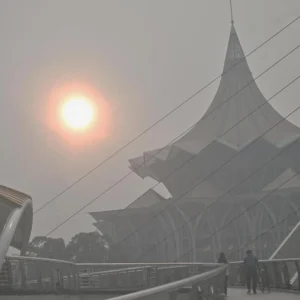
Volcanoes can also produce spectacular effects closer to the ground. Fine particles in volcanic clouds can scatter sunlight and produce vivid red and orange sunsets. Eruption clouds can also generate volcanic lightning when ash particles collide and become electrically charged.
What about volcanic carbon dioxide?
Volcanoes release carbon dioxide, but it is important to put this into perspective.
Volcanic CO₂ contributes to the natural carbon cycle, but modern human activities release vastly more CO₂ than volcanoes do. USGS estimates that volcanic emissions account for less than 1% of the CO₂ added to the atmosphere by human activities.
Powerful, productive and dangerous
Volcanoes are therefore a perfect example of nature’s complexity.
They can destroy villages but create fertile farmland. They can produce deadly eruptions but also provide geothermal energy. They can bury landscapes in ash but, over geological time, create new land and ecosystems. They can disrupt the climate for several years while also helping scientists understand how Earth’s atmosphere works.
The challenge is not to decide whether volcanoes are “good” or “bad”. It is to understand them.
By monitoring volcanic activity, studying their geological systems and learning how communities can prepare for eruptions, scientists can help reduce the risks while enabling societies to benefit from the resources that volcanic regions provide.
Volcanoes remind us that on Earth, destruction and creation are often part of the same natural process.