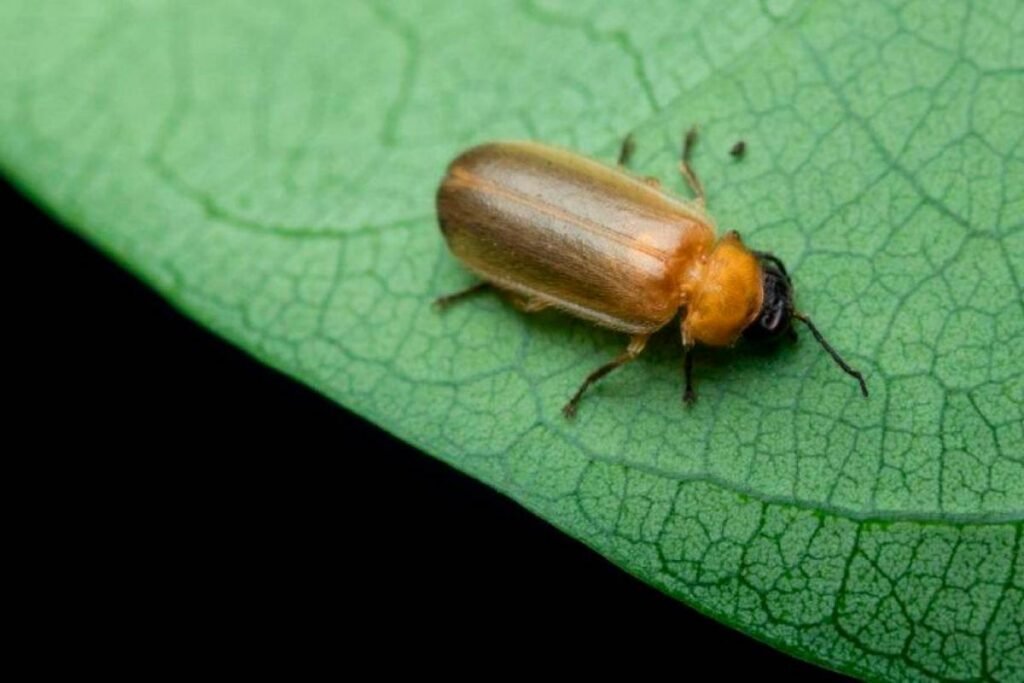
The rediscovery of a rare firefly, Gombak bent-winged firefly (Pteroptyx gombakia), a species believed to have gone unrecorded for more than a century, has prompted the Malaysian government to pursue a 300-metre ecological buffer around Bukit Kiara Federal Park, highlighting the scientific importance of protecting increasingly fragmented urban habitats.
Minister in the Prime Minister’s Department (Federal Territories) Hannah Yeoh said the government was now engaging landowners surrounding Bukit Kiara following Kuala Lumpur City Hall’s (DBKL) announcement of the proposed buffer zone.
“The KL mayor said that he would create a 300-metre buffer zone, and we now have to talk to the landowners… that discussion is ongoing now,” she said during a panel discussion titled Business vs Nature: Who Wins and When? at the National Climate Governance Summit (NCGS) 2026 here today.
The proposed setback follows the rediscovery of the firefly species in Bukit Kiara, an urban green area increasingly surrounded by development.
Yeoh said the discovery had reinforced the need to protect the habitat, while acknowledging that the government had to balance conservation objectives with the interests of landowners who had paid substantial premiums for their properties.

The ecological significance of the discovery extends beyond the firefly itself. Fireflies are highly sensitive to changes in their surroundings and can depend on specific combinations of vegetation, humidity, water quality, darkness and food sources to survive.
Their presence can therefore indicate the health and continuity of an ecosystem — making the rediscovered species potentially important as a biological signal of the condition of Bukit Kiara’s remaining natural habitat.
DBKL announced the 300-metre buffer during an Earth Day programme in May after residents raised concerns over biodiversity, traffic congestion and the effects of a proposed development opposite Bukit Kiara Federal Park.
The setback is intended to reduce the pressure of development on the habitat while discussions continue with landowners and developers on a practical arrangement.
For conservation scientists, the issue is not simply whether a patch of forest remains untouched, but whether the ecological conditions that support species such as fireflies can survive around it.
Urban development can alter drainage patterns, increase artificial lighting, remove vegetation and change microclimates. Such changes may affect insects whose life cycles depend on particular environmental conditions, even when their habitats are not directly cleared.
The Bukit Kiara proposal therefore places a familiar urban dilemma in a new scientific context: whether Kuala Lumpur can retain ecological functions within a rapidly developing metropolitan landscape.
Yeoh cited the long-running Taman Rimba Kiara dispute as an example of how apparently competing demands for housing and environmental protection could eventually be reconciled through sustained engagement among residents, government agencies, developers and civil society.
She said the same approach was needed at Bukit Kiara.
The government is also seeking to broaden cooperation with the private sector on urban environmental protection, with developers, businesses and financial institutions being encouraged to contribute to conservation and climate resilience.
“DBKL is engaging developers in reviewing redevelopment guidelines to ensure public open spaces created through new projects are meaningful and accessible, rather than fragmented pockets of greenery,” Yeoh said.
She said the government could not deliver urban environmental reforms alone, adding that businesses and financial institutions also had a role in protecting green spaces and strengthening the city’s resilience to flooding.
Banks, she said, had already begun providing funding for programmes to activate and maintain protected parks.
The Bukit Kiara firefly discovery adds another dimension to that effort. What might once have been regarded simply as an undeveloped patch of greenery is now potentially a sanctuary for a species that had disappeared from scientific records for generations.
The challenge for Kuala Lumpur will be to ensure that the 300-metre line on a planning map translates into an ecological buffer that actually protects the conditions the fireflies need to survive.
In that sense, the rediscovered insect may be a small creature carrying a much larger message: in a city under constant development pressure, biodiversity conservation increasingly depends not only on protecting forests, but on understanding and preserving the ecological systems within which they function.