
At every petrol station, there will be a dedicated site for charging electric vehicles.
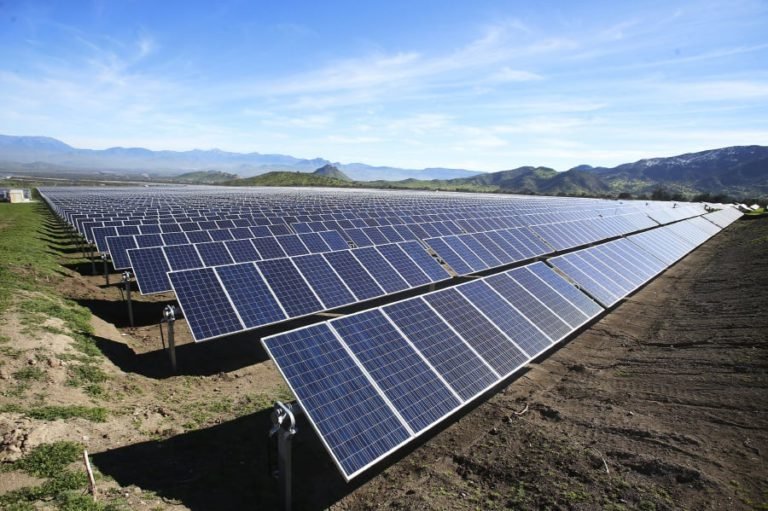
What was a barren land has been filled with solar panels that stretch endlessly out of our sight.
This is widely known as humanity’s best efforts to protect our climate: clean, engineered progress allowing us to maintain our modern, heavy consumption lifestyles without breaking the planet.
We are told that green innovations will divert economic growth from ecological collapse, but this promises a dangerous comforting belief.
It steers us to think that we can engineer our way out of a climate crisis while changing absolutely nothing about how much energy we demand.

The Negativity Behind Demands
People who believe that scientific and technological progress is the primary engine for improving human living conditions and solving major global crises will argue that with enough clever engineering, humanity can fuel however much the global economy expands sustainably.
Yet this logic ignores the basic law of resource economics that was first uncovered during the Industrial Revolution.
James Watt’s steam engine made coal usage far more efficient in producing mechanical and electrical energy during the 19th century.
Since each engine required significantly less fuel to perform the same amount of work, logic suggested that Britain’s overall demand for coal would drop.
Instead, total coal consumption skyrocketed.
The increased efficiency dramatically lowered the operating costs, and ultimately made steam power more accessible to dozens of new industries.
So rather than saving fuel, technological efficiency pushed the accelerating industrial growth and multiplying Britain’s total appetite for coal.
Phenomenon of Jevons Paradox
In 1865, English economist William Stanley Jevons published The Coal Question, where he noticed a strange phenomenon.
Explaining this paradox, Jevons famously wrote, “It is a confusion of ideas to suppose that the economical use of fuel is equivalent to diminished consumption. The very contrary is the truth.”
This ideology is now known as the Jevons Paradox, and is playing out on a massive scale today.
When new and “greener” energy systems are made, it simply lowers the cost and friction of using them.
These systems open opportunities for humanity to conserve energy for the future, since fewer resources are required to produce the same amount of energy.
Instead, society uses the extra energy available to build larger vehicles, power massive AI data centres, and accelerate overall industrial output.
Designing for efficiency acts in reverse; it does not reduce consumption, and rather acts as a catalyst for even greater demand.
The Material Limits of a Finite Planet
Relying solely on green technology increases the effects of the harsh physical realities of finite global material supply.
While energy demands continuously rise, replacing fossil fuels with renewable energy does not eliminate the problem of resource extraction; it just shifts the burden onto other industries.
To build enough wind turbines, solar panels, and EV batteries to support our growth in consumption requires an unimaginable tempo in mining for copper, lithium, cobalt and other rare earth metals.
This mining causes severe environmental destruction and water depletion across the developing world.
True ecological balance cannot be achieved by mining or burning our way into it.
From Consumption to Reduction
None of this implies that green engineering and innovation is useless, rather it means its purpose has been fundamentally misunderstood.
Developing technology to help generate electricity that reduces the rate of carbon emission shouldn’t be treated as an excuse to sustain our habits of endless, wasteful consumerism.
We can only reach the stage of “true sustainability” when we start practicing the use of technological innovations with the intention to reduce energy usage.
Modern engineers should prioritise designing machineries and civil structures for durability, and robust public transit.
Similarly, we should measure the progress of humanity by human well-being rather than endless GDP expansion.
A Demand Crisis, Not a Supply Problem
The climate crisis is ultimately a demand crisis, not just a supply-side engineering challenge.
Until we accept that infinite consumption on a finite planet is a thermodynamically impossible challenge, no amount of technological genius can save us. It is time to stop asking how engineers can power our endless consumption, and start asking how society can learn to live within the Earth’s limits.
Author : Wong Jia Qi is an incoming freshman in Mechanical Engineering at Monash University Malaysia. The writer is participating in The Petri Dish Fellowship Writing Lab.