
welfare in captivity. Photo: Satya Narayana Rao Ramasamy
I have often visited zoos with a mixture of fascination and curiosity. Sometimes, I find myself standing before an empty enclosure, wondering where the animal has gone. Other times, I watch an animal remaining unusually still, questioning whether it is simply resting or whether there is more to its behaviour than meets the eye. Yet, how much can we truly understand about an animal’s wellbeing from just a few moments of observation?
Zoos have long been associated with conservation, education and wildlife protection. As natural habitats disappear and more species face threats to their survival, their responsibilities become increasingly important. But protecting animals should mean more than keeping them alive. If zoos exist to safeguard wildlife, shouldn’t we also question whether the animals under their care are genuinely living well?
When an Empty Enclosure Is a Good Sign
We buy tickets expecting to see animals. An unseen tiger or hidden primate might feel like a disappointing attraction. But perhaps the animal has simply chosen privacy.
A 2024 scoping review by Rust and colleagues, published in Applied Animal Behaviour Science, found that providing captive animals with choices was generally associated with positive welfare outcomes, although further research is needed.

The elephants I photographed standing in a shaded area reminded me how basic environmental choices can matter. I could not know why they stood there, but the ability to move between suitable spaces is important.
An enclosure should not be designed exclusively for uninterrupted viewing. A good zoo may occasionally disappoint visitors by allowing animals to disappear. That can be an educational opportunity, not a failure.
Better interpretation could explain why animals need secluded spaces instead of rewarding visitors for getting a photograph. If education is truly part of a zoo’s mission, respecting an animal’s choices should be among its lessons.
Longer Lives, But Better Lives?
Some animals undoubtedly benefit from the protection zoos provide. In a 2016 study published in Scientific Reports, Tidière and colleagues compared 59 mammal species and found that zoo populations had longer lifespans in 84% of the species examined. Captivity can reduce threats such as predators, disease and food scarcity.
That is worth acknowledging, but longer life does not automatically establish better welfare. An animal might receive excellent veterinary care while having limited space to explore or little control over its daily experiences.
A 2023 review by Tallo-Parra and colleagues, published in Animals, highlighted the importance of using multiple behavioural and physiological indicators to assess zoo animal welfare. The Five Domains model, updated by Mellor and colleagues in 2020 and published in Animals, evaluates animal welfare through nutrition, physical environment, health, behavioural interactions and mental state.
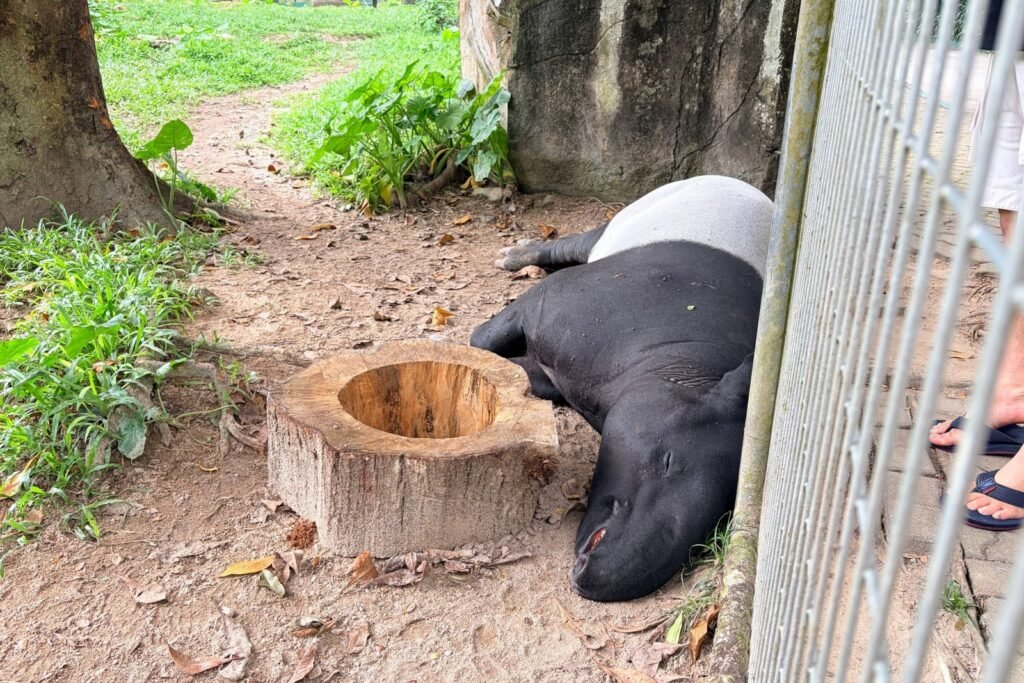
The tapir resting and giraffe feeding in my photographs offer glimpses of their day, not verdicts on their wellbeing. We cannot determine welfare from a photograph. It requires careful, repeated, species-specific observation.
Conservation Beyond the Enclosure
As human activities fragment and destroy habitats, zoos can become important partners in preventing extinction. The International Union for Conservation of Nature recognises roles for zoos in breeding, veterinary research, reintroduction and conservation partnerships.
Zoo Negara reports that its milky stork programme has bred more than 200 birds since 1987 and reintroduced 100 into the wild. This is a tangible example of conservation extending beyond public displays. Wildlife rescue and rehabilitation can also provide injured or displaced animals with specialist care, although not every animal can safely be released.
Yet conservation should not become a blanket justification for captivity. Breeding an animal is not the same as restoring its habitat or securing a wild population. Reintroduction requires suitable ecosystems and continuing protection. Zoos should be clear about which programmes contribute to conservation and which animals need lifelong care.
A breeding success deserves recognition. It should also invite a harder question: what happens to the species beyond the zoo fence?
Habitat loss cannot be solved by moving every threatened species behind fences. Without forests, wetlands and safe corridors outside, even successful captive breeding risks becoming an achievement without somewhere suitable for animals to return.
The Cost of Caring Properly
Caring for animals is expensive. In a 2025 news report, Zoo Negara described the financial strain it faced during the COVID-19 pandemic, when monthly operating expenses were reported at RM1.3 million to RM1.5 million despite severely reduced visitor income. Animals still needed feeding and care even when ticket sales collapsed.
Improving welfare therefore demands more than criticism. It demands sustainable funding for suitable enclosures, enrichment, veterinary services and expert staff. These are not optional luxuries; they are part of responsible care.
Skills matter just as much. In 2024, the Malaysian Association of Zoological Parks and Aquaria organised a training programme at Taiping Zoo covering animal care, behaviour, nutrition and zoo management. Keepers, veterinarians and animal behaviour specialists require continuous training, as different species have distinct nutritional, behavioural and healthcare needs.
Public support matters, but so does accountability. If zoos seek funding in the name of conservation and welfare, they should show how resources improve animals’ lives, staff capabilities and protection of wild populations.
Zoo funding debates also deserve nuance. Closing underfunded facilities overnight does not solve the needs of animals already living there. But treating every request for money as unquestionable would not guarantee welfare either. Support and scrutiny should go together.
Who Is the Zoo Really For?
Malaysia’s Wildlife Conservation (Operation of Zoo) Regulations 2012, amended in 2013, establish requirements for zoo operations. These safeguards are necessary, but legal compliance should be the beginning of our expectations, not the end.
Zoos should make welfare assessments, enrichment programmes and conservation outcomes understandable to visitors. They should welcome independent evaluation and acknowledge when change is needed. If a species’ needs cannot reliably be met, keeping it should be reconsidered rather than defended automatically.
I am not arguing that all zoos should close. Some animals cannot return to the wild, and responsibly managed facilities may offer them their best available care. Nor should we forget the important work of breeding, rehabilitation and public education.
But a zoo’s value cannot be measured only in ticket sales, lifespan statistics or photographs of newborn animals. The more urgent question is whether its inhabitants have opportunities to live well.
The next time we visit, perhaps we should ask less about why an animal is hidden and more about how it lives when nobody is watching.
A cage can keep an animal safe. It cannot, by itself, make that life good.
Author: Satya Narayana Rao Ramasamy is a PhD candidate in Marine Science at Universiti Kebangsaan Malaysia (UKM). His research focuses on sustainable aquaculture nutrition and alternative feed ingredients. He is also interested in making scientific knowledge more accessible and relevant to society. He is participating in The Petri Dish Fellowship Writing Lab.