What if one of Malaysia’s most valuable crops could do far more than produce cooking oil?
Researchers at Monash University Malaysia believe the answer may lie not in the oil itself, but in a largely overlooked part of the oil palm—the kernel seed. Their work has led to the development of a plant-based milk and a caffeine-free coffee alternative that could expand the role of oil palm in human nutrition while making better use of existing agricultural resources.
The research, led by Dr Lee Yee Ying, senior lecturer at the School of Science and principal researcher at the MIPO Biorefinery Laboratory, reflects a growing movement in food science to create foods that are nutritious, sustainable and better suited to changing consumer needs.
“We aim to rethink how every part of the oil palm can contribute to healthier food systems,” Dr Lee said. “Instead of treating parts of the crop as by-products, we are exploring how they can become valuable food ingredients.”

The idea took shape during Dr Lee’s doctoral research, which focused on improving the nutritional qualities of edible oils. Her work centred on medium- and long-chain triacylglycerols (MLCT), a functional oil created by combining palm oil and palm kernel oil through enzyme technology.
Unlike conventional edible oils, MLCT is designed to deliver specific nutritional benefits. Studies suggest it may help support weight management by influencing how the body metabolises fat, illustrating how food science is moving beyond simply producing calories towards designing foods with added health functions.
Unlocking the Potential of the Palm Kernel
While palm oil has received global attention for decades, Dr Lee believes the palm kernel has remained one of the crop’s most underutilised resources.
Hidden inside every oil palm fruit, the kernel produces palm kernel oil, which, like coconut oil, is naturally rich in medium-chain triglycerides (MCTs). These fats are metabolised more quickly than longer-chain fats and have been associated with providing a readily available source of energy. Researchers are also studying their potential role in supporting cognitive function, sports nutrition and weight management.
The kernel itself is equally valuable.
After oil extraction, the remaining material—known as palm kernel cake or palm kernel expeller—is used mainly as livestock feed despite containing high-quality plant proteins.
“We saw an opportunity to unlock more value from a resource that already exists,” Dr Lee said.
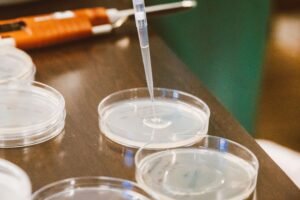
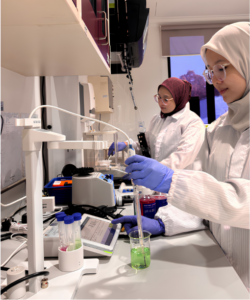
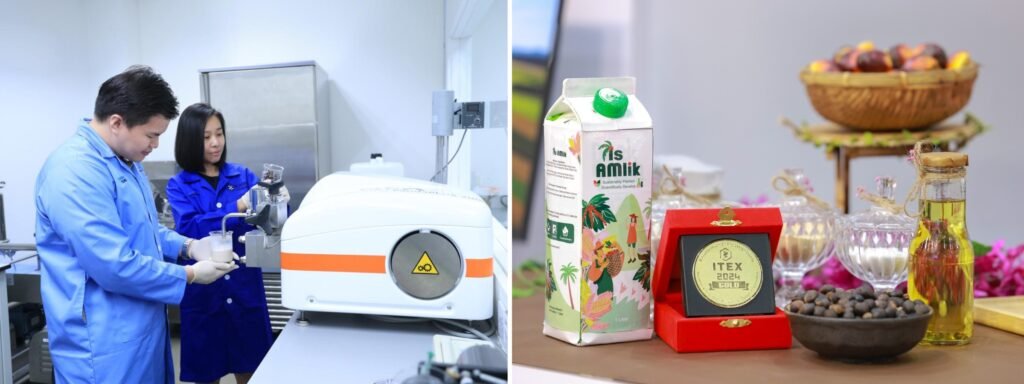
Using enzyme technology, her team developed a patented process that transforms proteins from palm kernel seeds into a plant-based milk called “Is AMilk.”
Unlike many dairy alternatives already on the market, the beverage is designed to provide a complete amino acid profile while improving protein digestibility through enzymatic processing.
It also addresses another challenge within the rapidly expanding plant-based food market.
Soy milk remains one of the world’s most common dairy alternatives because it is affordable and rich in protein. However, soy is also among the major food allergens, making it unsuitable for some consumers.
Palm kernel-based milk offers a different option.
According to the research team, it is naturally free from common soy allergens while providing a locally sourced alternative that may benefit people with lactose intolerance, a condition that affects millions across Asia. By using Malaysian agricultural resources, the innovation could also reduce dependence on imported ingredients while supporting a more resilient local food system.
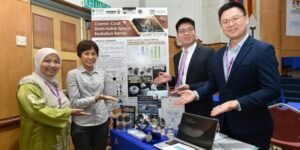
The research has attracted international recognition, receiving a Gold Medal and Best Invention for Women at the 35th International Invention, Innovation and Technology Exhibition Malaysia, a Silver Award at the Malaysia Technology Expo and First Runner-Up in the Innovasi Anak Selangor competition.
Beyond Oil: Building the Next Generation of Foods
The researchers also uncovered another unexpected discovery during the development of “Is AMilk.”
When processed under carefully controlled conditions, palm kernel seeds produced a rich roasted aroma remarkably similar to coffee.
That observation led to another patented innovation—a caffeine-free coffee substitute made entirely from palm kernel.
Unlike conventional coffee, the beverage contains no caffeine, making it an alternative for consumers seeking to reduce their caffeine intake without sacrificing the familiar flavour of roasted coffee. It may also offer a more affordable option as climate change and supply disruptions continue to affect global coffee production and prices.
For Dr Lee, these innovations demonstrate how science can reveal new value in resources that have long been overlooked.
They also reflect the growing importance of biorefinery thinking, where every component of an agricultural crop is viewed as a potential source of food, nutrition or other valuable products rather than waste.
Malaysia has long been recognised as one of the world’s leading palm oil producers. As consumers increasingly seek healthier diets, sustainable food production and locally sourced ingredients, researchers believe the next chapter of the oil palm story may lie beyond conventional cooking oil.
Instead, it could involve developing entirely new categories of foods from parts of the crop that have traditionally received little attention.
“Food innovation is no longer only about creating new products,” Dr Lee said. “It is about making better use of the resources we already have while improving nutrition and sustainability at the same time.”
For a crop that has shaped Malaysia’s economy for generations, that may prove to be its most significant transformation yet—not producing more oil, but helping feed the future in smarter, healthier and more sustainable ways.