My dad has always been the first person I look up to. I still remember shouting his name from the stage as my teacher asked me who my favourite Superhero was during a primary school event. He is one of the most intelligent and capable men I know. So many of the things I have achieved and the opportunities I have been given would not have been possible without him. Growing up, I never really thought about how fortunate I was to have someone like that in my life. His presence was simply something I had always known.
Perhaps that is the strange thing about being loved by someone for as long as you can remember. Their presence becomes so woven into the fabric of your life that you forget it is something to be grateful for.
You grow accustomed to their voice, their company and the comfort of knowing they will always be there for you. You assume there will always be another conversation and another meal to share the next Saturday evening. You don’t realise how precious these moments are because for as long as you have known them, they have simply been yours.
It was not until I was fifteen that I learned my dad had been diagnosed with morbid obesity. Honestly, I was too young to understand the extent of his condition, let alone what it meant for his future. I knew very little about the human body beyond what I was taught in school.
Bariatric Surgery

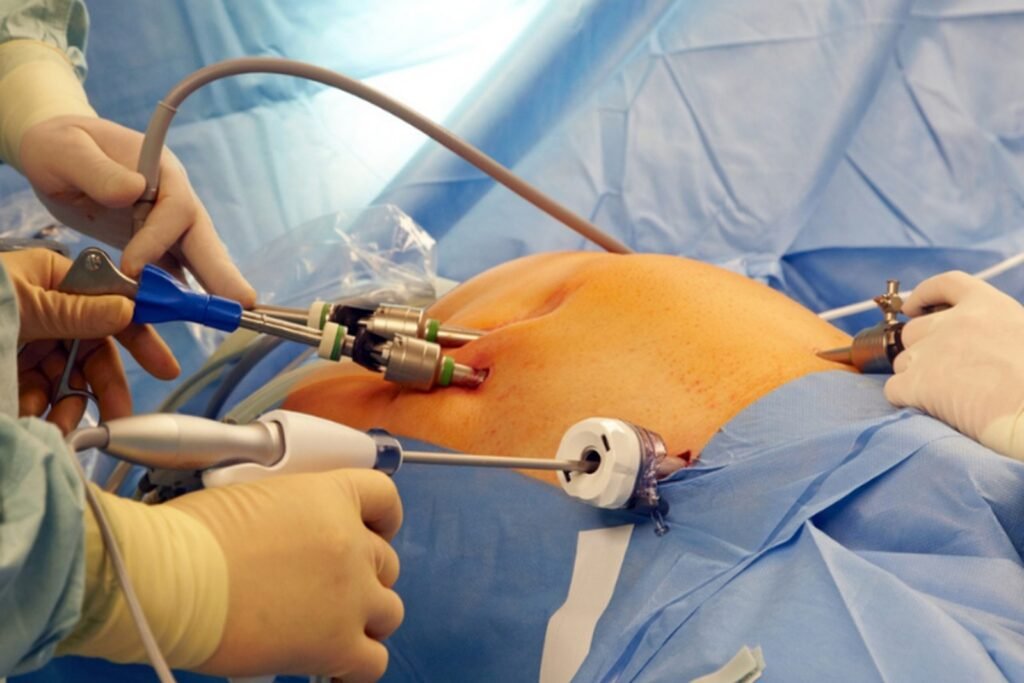
Months later, my dad underwent surgery. But the implications afterwards reached beyond medical records and appointments. They found their way into our home, routines, and the little things I had never imagined would become difficult.
I used to think of meals as something that brought a family together. We ate the same food and told jokes that made everyone around the table laugh. But my dad could no longer enjoy food in the same way.
His portions grew smaller, and even what we thought was already such a little amount of food could leave him feeling nauseous. After just a few bites, he would often say, “I can’t eat anymore. It feels like the food is pushing back up”. Watching him struggle to keep food down and often looking so exhausted was genuinely one of the hardest things I have ever had to witness.
The table was still there, and we were still a family. It is so difficult to explain the grief of something that has not entirely disappeared. My dad was still beside me, but I missed the ease of doing something so ordinary like sharing a burger together or letting him have a taste of the delicious curry I cooked.
“I’ll have a bit because Kakak (me) cooked it!” he would always say, probably just to make me feel better. For a long time, all I could do was watch and wonder. I was so desperate to understand why his body was still struggling despite the treatments being considered done.
Obesity Up Close
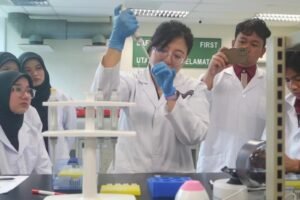
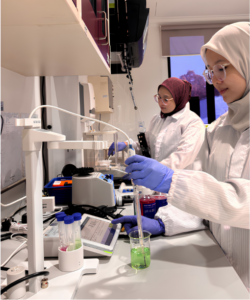
Years later, I began approaching obesity from an entirely different perspective. During a research internship, I explored the genetics of obesity and biotechnology. What I had once understood only through the worry of a daughter became something I could explore through the curiosity of a student.
Obesity is far more complex than the explanations we often hear. It is a multifactorial condition shaped by genetics, physiology, behaviour and environment. The body is not a simple machine that responds to one variable at a time. I remember watching Peter Attia’s TEDMED talk on obesity, where he challenged the idea of “Calories in, Calories out”.
He compared the human body to a battery, explaining how having energy stored in the body does not necessarily mean it can use that energy effectively. For example, insulin resistance can interfere with how the body regulates energy, thus explaining why someone can have plenty of energy stored yet still feel constantly tired.
I then learned about leptin, a hormone that signals the body’s energy stores to the hypothalamus, which is the part of the brain involved in regulating appetite and energy balance. My internship also introduced me to CRISPR-Cas9, a gene-editing tool that allows scientists to investigate how specific genes work.
Genes that Signal Hunger
I started imagining how understanding genes involved in hunger signalling and metabolism might one day help researchers develop treatments tailored to different patients. Beneath what we see on the surface lies a world of biological processes that we are still trying to understand. Yet, somewhere within that world of scientific terms was a person I had known and loved long before I knew the language to describe any of it.
The more I learn, the more I realise that these are two different kinds of understanding. Science could help explain the mechanisms behind a condition. But it could not fully translate the experience of living in a body that no longer behaves as you expect it to. My humble experience and the knowledge I have gained so far have not given me the answers I once wished for. But they have given my questions somewhere to go.
My dad remains the person I look up to most. I do not want his condition to become the story I tell about him. Rather, his experience is part of the reason I have come to see the human body with greater curiosity and to study biology with a greater sense of purpose. Before I knew about genetics, I knew that I loved my dad. Before I could explain what was happening inside his body, I knew that I wanted him and other people who might be going through the same thing as him to feel better.
I still have so much to learn, but I hope that, as I continue learning about the human body, I will never lose sight of the human lives within it. Perhaps that is what should drive us to keep exploring this vast, beautiful world of science. Not only the possibility of discovering something new, but also the possibility that what we discover might make someone’s life a little easier.
Because before there was science, there was love. Perhaps the most meaningful discoveries begin when love gives us a reason to ask why.
About the Author : Sharifah Shazryn Afiefy Syed Atif is studying Biomedical Science at King’s College London. She is participating in The Petri Dish Fellowship Writing Lab.