
How do ‘brainless’ starfish decide what to eat?
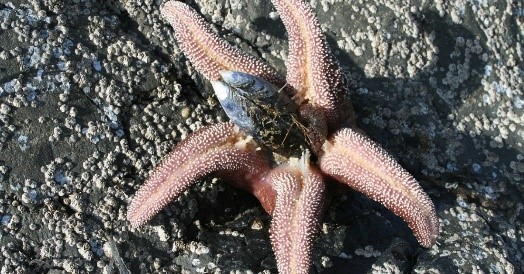
Food is essential for any living organism to continue to survive. But for land dwellers, food is easily accessible in most parts of the world. Every day we can choose what we want to eat and to choose, we use our brain to decide our meals for the day. But how about starfish? Without having […]
How much of our brain do we really use?
Do we only use 10% of our brains? A survey indicated nearly 65 percent of Americans believe that humans use only 10% of their brain and it is also a favourite pseudoscience in movies, where human beings only use 10% of their brain and if they awaken the remaining part of their brain then they […]
Who invented VELCRO?

The hook and loop fastener or commonly known as ‘velcro’ is a product, we frequently come across in our everyday life but do you know who is the brainchild behind this invention? It is George de Mestral, a Swiss engineer who invented this infinitely applicable product, with applications ranging from consumer apparel to space travel. […]
What causes fruits to ripen?

Fruits are ready to eat when they are fully ripe. However, have we wondered what causes fruit to ripen? Under natural conditions, a gaseous plant hormone called ethylene is released by the plant, triggering the production of enzymes responsible for fruit ripening. During ripening, fruits tend to change from green to other colours, including purple, […]
What makes the sound when we crack our knuckles?

Cracking knuckles can be addictive and studies show that as many as 54 percent of people crack their knuckles. What drives them to crack their knuckle with a “popping” sound? The synovial fluid in our joints serves a similar function as motor oil in a car’s engine, by lubricating our joints as well as reducing […]
Why do snakes flick their tongue?

Do you feel frightened when snakes flick their tongue? Although it is frightening, it is a natural behaviour for snakes to flick their tongue. Snakes flick their tongue to gather information from their surroundings to deliver to their sensory organ in their mouth. Snakes do have nostrils as humans do, however, snakes use their nostrils […]
Why is blood red?

A small paper cut in the finger and we can see red blood oozing out. A common assumption is that the presence of haemoglobin causes the red colour of blood. However, the real reason is the shape of porphyrin that determines the redness of blood. Porphyrin is a ring of atoms in haemoglobin that binds […]
Who discovered the existence of galaxies other than our Milky Way?

IN the early 1900s, astronomers were debating the makeup of spiral nebulae — cloudy, spiral-shaped objects found throughout the night sky. Were they gas clouds located within our Milky Way galaxy, or were they vast groups of stars located far beyond our galaxy? In 1919, American astronomer Edwin Hubble tackled the question. His keen astronomical […]
Why are clownfishes not stung by sea anemones?
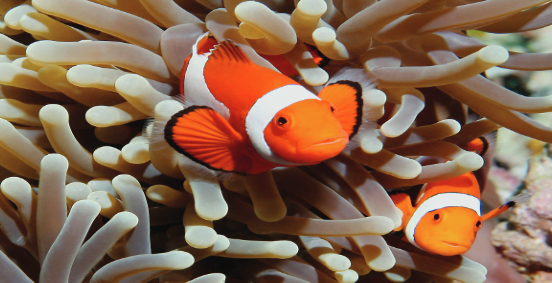
The partnership between clownfish and sea anemones is one of the most iconic in the animal world. Unlike in Pixar’s film Finding Nemo, clownfish seldom stray far from their anemone. The clownfish live within the sea anemone’s poisonous tentacles. Those tentacles keep would-be predators at bay, including morays, scorpionfishes and snappers. In return, the […]
Mysteries of Japanese dinosaur unveiled

Dated back in 1934 on Southern Sakhalin Island, a Japanese team has found fossils which were then named Nipponosaurus sachalinensis. Nipponosaurus got its name from the word ‘Nippon’ which means Japan in the Japanese word and it was named by Professor Takumi Nagao of Hokkaido Imperial University. Sakhalin Island is now considered part of Russia […]